
You’ll transform your flexibility with these ten proven workouts: dynamic warm-ups that boost blood flow and reduce injury risk, foundational static stretches held for 15-60 seconds, yoga-inspired sequences that can increase your range of motion by 35% in eight weeks, advanced lower body mobility drills, functional athletic movements, energizing morning routines, calming evening practices, full-body circuits, progressive training protocols, and thoracic mobilization exercises. Each workout targets specific muscle groups while building extensive flexibility that enhances your daily movement and athletic performance—discover how to structure these routines for maximum results.
Key Takeaways
- Dynamic warm-ups like hip circles and leg kicks improve hamstring flexibility by 7-10% while reducing injury risk.
- Static stretches held 15-60 seconds post-workout increase joint range of motion and reduce muscle stiffness when practiced twice weekly.
- Yoga-inspired workouts enhance range of motion up to 35% within eight weeks while reducing stress and improving sleep.
- Advanced lower body exercises like 90/90 switches and Cossack squats target multi-planar movements for comprehensive hip mobility.
- Morning stretching sequences boost circulation and reset neural pathways, requiring 2-3 weekly sessions for measurable flexibility gains.
Dynamic Flexibility Warm-Ups to Energize Your Body
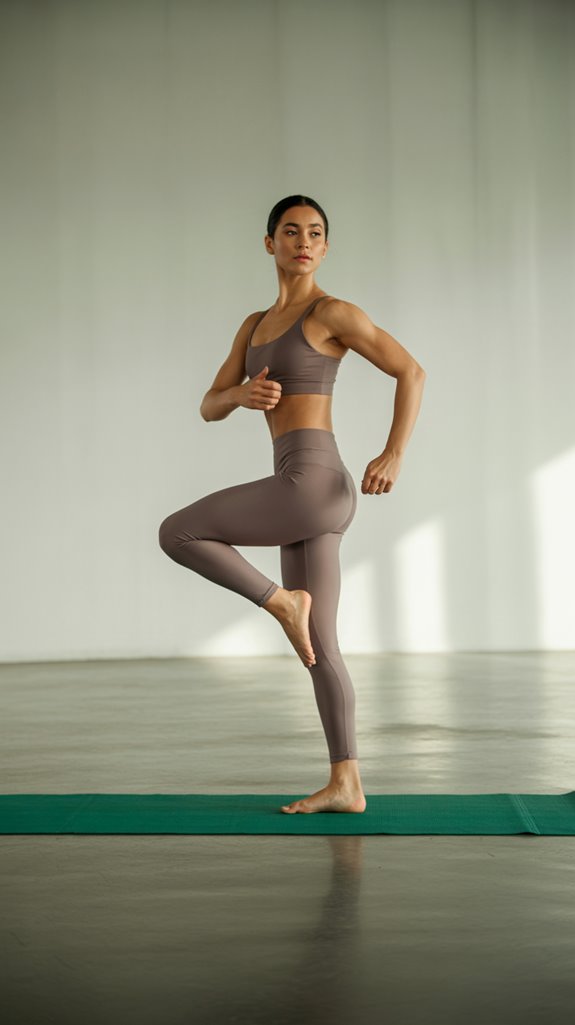
Before you plunge into your workout, dynamic flexibility warm-ups prepare your body by moving your muscles and joints through controlled patterns that mimic your upcoming activity. Unlike static holds, dynamic stretches elevate blood flow and muscle temperature, activating both agonist and antagonist muscles for superior coordination. You’ll experience enhanced neuromuscular activation and body awareness that translates directly to performance. Incorporate mobility drills like hip circles, walking lunges with twists, arm circles, and leg kicks into your routine. These movements progressively expand your range of motion—clinical studies demonstrate 7-10% improvements in hamstring flexibility. The routines are customizable to accommodate your individual needs based on your specific sport, age, and strength level. The FIFA 11+ protocol proves this approach notably reduces injury rates while optimizing speed and agility. You’re fundamentally choosing functional preparation over muscle relaxation, making your body immediately ready for vigorous exercise rather than stretching a frozen rubber band. Many people find adding static stretches after workouts helps with recovery and relaxation.
Foundational Static Stretches for Everyday Flexibility

After your workout winds down, static stretches become your primary tool for building lasting flexibility and muscular recovery. Hold each position for 15-60 seconds without bouncing to prevent activating your stretch reflex. Focus on five foundational movements: hip flexor stretches to release tension from prolonged sitting, hamstring stretches targeting your posterior chain, shoulder stretches correcting upper-body posture, quadriceps stretches balancing anterior leg tension, and back stretches decompressing your spine. These stretches pair well with simple, equipment-free upper body workouts you can do at home to create a balanced routine.
The static stretching benefits multiply with consistency—practicing twice weekly increases your joint range of motion while reducing muscle stiffness and pain. Essential techniques include maintaining balanced posture throughout each hold, breathing deeply as you deepen the stretch, and progressing incrementally without forcing discomfort. Prolonged stretching allows your muscle spindles to adapt for greater lengthening over time. You’ll notice measurable improvements within three weeks of regular practice.
Yoga-Inspired Flexibility Workouts for Mind and Body
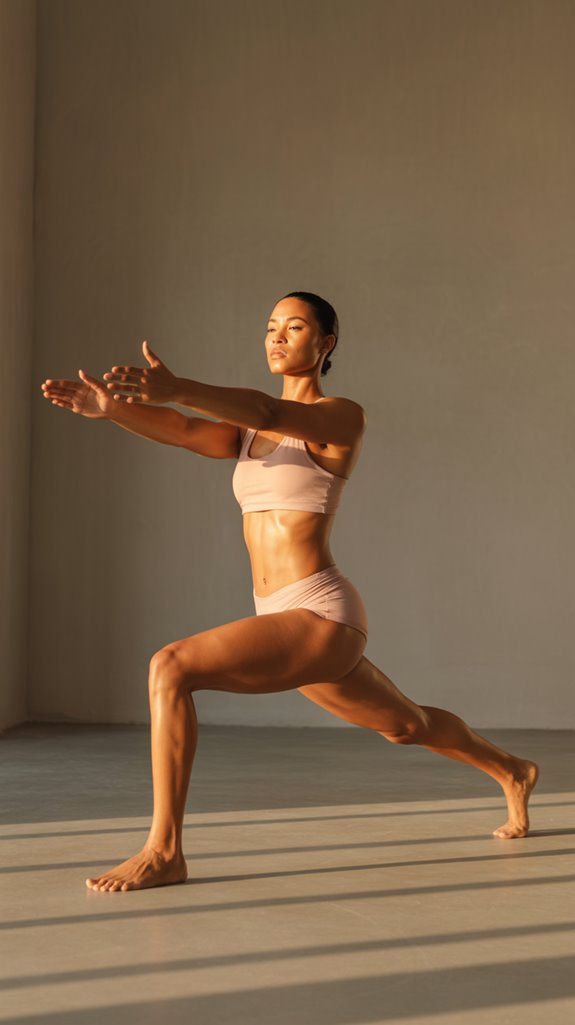
While static stretches build foundational flexibility, yoga-inspired workouts take your practice deeper by uniting physical movement with breath and mindfulness. The yoga benefits extend beyond mere flexibility—you’ll enhance range of motion by up to 35% within eight weeks while simultaneously activating neurological mechanisms like reciprocal inhibition that allow muscles to release more effectively.
The mind body connection distinguishes yoga from conventional stretching. As you flow through poses like Cat-Cow for spinal mobility, Seahorse Pose for hip flexors, and Fan Pose for shoulders, you’re stimulating your autonomic nervous system to reduce stress while improving connective tissue elasticity. Even gentler yoga styles provide meaningful strength benefits alongside flexibility gains, making them accessible for practitioners at any fitness level. Practice these sequences 2-3 times weekly, synchronizing breath with movement. This integration produces measurable improvements in joint angles, balance, and functional outcomes that surpass traditional stretching alone. Many readers find these routines especially motivating when paired with daily yoga workouts that cater to every skill level.
Advanced Lower Body Mobility Exercises
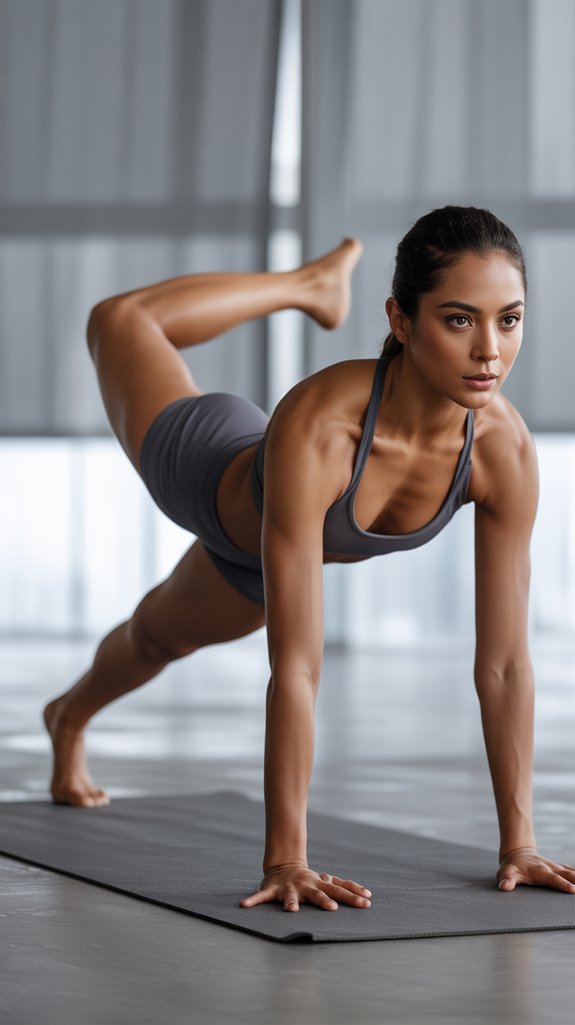
As your flexibility foundation solidifies, you’ll need rotational and multi-planar movements that challenge your hips beyond forward-and-back patterns. Advanced hip mobility techniques like the 90/90 switch and Cossack squat target internal rotation, external rotation, and lateral flexibility simultaneously. Integrate clamshells and resistance band sidesteps to stabilize your pelvis during complex athletic demands.
Dynamic stretching routines should include the World’s Greatest Stretch for thoracic-hip coordination and single-leg Romanian deadlifts for unilateral hamstring control. Deep ring squats train hip crease depth while activating posterior tilt. Add weighted step-ups and banded reverse clamshells once bodyweight movements feel effortless.
Program 2–3 sequences with 8–10 reps per side before high-intensity training. You’ll notice improved squat depth, lateral agility, and injury resilience when you address sagittal, frontal, and rotational planes consistently. These exercises are suitable for both beginners and experienced individuals, allowing you to adapt intensity and complexity to your current fitness level.
Functional Athletic Flexibility for Performance Enhancement

Mastering lower body mobility opens the gateway to sport-specific performance gains that extend far beyond basic squat depth. You’ll discover that functional athletic flexibility directly enhances your speed, agility, and power through improved movement efficiency across multiple planes of motion. When you optimize your functional range, you enable faster reactions, quicker directional changes, and more efficient force transmission through the kinetic chain.
Transform your athletic output with these performance-driven approaches:
- Dynamic stretching protocols that mirror sport-specific movement patterns
- Multidirectional mobility drills enhancing joint freedom and reducing mechanical restrictions
- Kinetic chain exercises maximizing power output through proper biomechanical sequencing
- Recovery-focused flexibility work that lengthens muscles and reduces post-training tension
This integrated approach helps you maintain proper form during explosive movements while reducing injury risk and supporting long-term athletic independence. Research indicates that stretching may predict injury risk in sprinters, highlighting the importance of proper flexibility assessment in speed-based sports.
Spine and Back Mobility Routines for Better Posture

Because your thoracic spine drives postural alignment more than any other spinal region, strengthening this area delivers measurable improvements that stretching alone can’t match. Research shows chronic strengthening produces significant postural corrections (effect size −1.04, p = 0.005), while stretching yields minimal results.
You’ll maximize thoracic mobility through foam roller extensions—position yourself supine, elevate your arms, and mobilize each segment for 5–10 seconds. Add lateral rotations with stabilized legs, driving controlled shoulder flexion paired with thoracic rotation. Prayer stretching improves thoracic spine relaxation and complements your foam roller work by targeting different tissue planes.
Combined cervicothoracic mobilization with targeted exercise produces superior outcomes: enhanced cervical ROM, reduced pain, and improved function (d = 1.14–1.61). These routines correct muscle imbalances, reduce compensatory lumbar stress, and eliminate movement dysfunction. Execute segmental “pillar” exercises to integrate stabilization with dynamic control across your entire spine.
Morning Stretching Sequences to Start Your Day Right

Your morning stretching sequence functions as a physiological ignition system—it floods stiff tissues with circulation, resets neural pathways dormant from sleep, and establishes movement patterns that prevent compensatory dysfunction throughout your day. Structure your morning routine around these evidence-backed protocols:
- Warm tissue preparation: Begin with 2–3 minutes of walking to prime muscle receptivity before static holds.
- Systematic progression: Target neck, shoulders, chest, trunk, hips, legs, and ankles sequentially—15–20 seconds per stretch, repeated to 60 seconds total.
- Dynamic-static integration: Combine controlled movement patterns with sustained holds for thorough range-of-motion development. Incorporate deep breathing throughout each stretch to enhance oxygen delivery and promote parasympathetic nervous system activation.
- Frequency optimization: Execute 2–3 weekly sessions minimum for measurable flexibility adaptation.
These stretch benefits extend beyond mobility—you’ll reduce musculoskeletal disorder risk while enhancing cognitive alertness and stress resilience simultaneously.
Evening Wind-Down Flexibility Practices
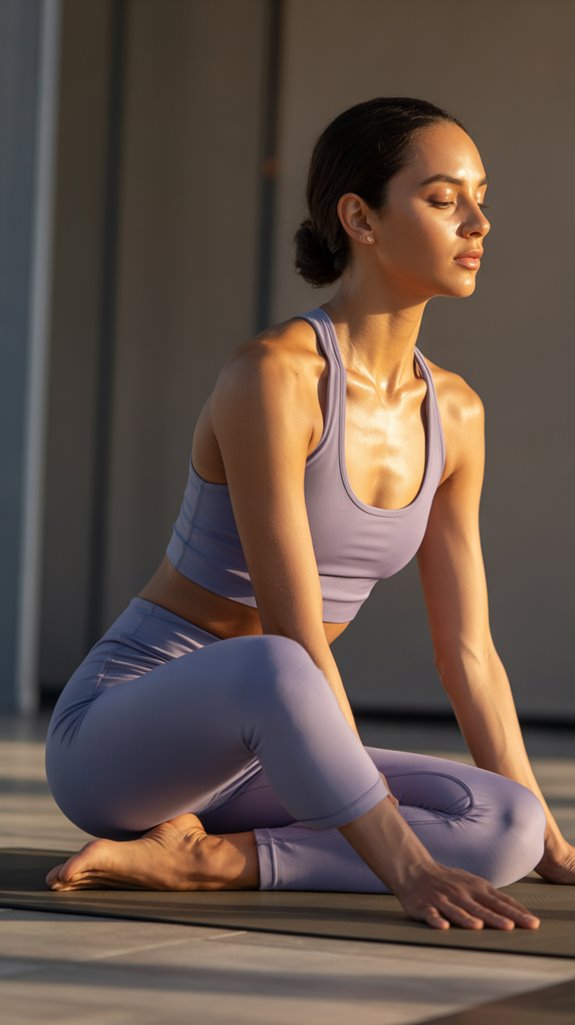
As daylight fades and cortisol levels decline, your body naturally shifts toward parasympathetic dominance—the ideal neurological state for implementing evening flexibility protocols that compound both physical recovery and sleep architecture improvements. Strategic evening relaxation sequences—holding poses like Child’s Pose, 90/90 Hip Stretch, and Supported Figure-4 for minimum 30-second intervals—systematically dismantle accumulated muscle tension while reducing sleep latency. You’ll activate down-regulation mechanisms through movements like Upward Dog and Modified Pigeon Rotation, enhancing circulation and body awareness simultaneously. Integrate diaphragmatic breathing during holds to amplify relaxation responses. Dedicate 10–20 minutes to bilateral stretching, customizing your sequence to target specific tension patterns in hips, neck, or spine. The Kneeling Hip Flexor Stretch connects lower back to upper leg, releasing accumulated tension from prolonged sitting and preparing your body for restorative rest. This consistent practice accelerates recovery, diminishes musculoskeletal complaints, and optimizes your auto-regulation capacity for superior next-day performance.
Full-Body Flexibility Circuit Training

When you integrate multiple flexibility modalities into a continuous, timed sequence, you’ll create what’s known as a full-body flexibility circuit—a training format that systematically addresses range of motion across all major joints while maintaining elevated heart rate and metabolic engagement.
Circuit Architecture for Ideal Mobility Progression:
- Exercise Selection: Alternate between dynamic stretches (leg swings, cat-cow), static holds (90/90 hip switches, child’s pose), and functional shifts (World’s Greatest Stretch, inchworms).
- Timing Protocol: Execute 5–7 exercises for 30–60 seconds each, repeating 2–4 rounds with minimal inter-exercise rest.
- Multi-Planar Sequencing: Order movements to address sagittal, frontal, and transverse planes while distributing muscular demand. Incorporate core stability movements like dead bugs to enhance coordination and engage all abdominal muscles throughout the flexibility sequence.
- Progressive Loading: Scale intensity through range expansion, tempo manipulation, or resistance integration.
This full body integration methodology delivers enhanced joint mobility, improved movement coordination, and reduced injury risk across athletic and functional populations.
Progressive Flexibility Training for Long-Term Results

Building flexibility that endures requires a structured progression model rather than haphazard stretching sessions scattered throughout your week. You’ll maximize ROM gains by implementing progressive routines that systematically increase duration and intensity—start with 10-minute sessions and gradually extend to 60 minutes as adaptation occurs. Schedule flexibility assessment at baseline, midpoint, and completion to quantify improvements and adjust protocols accordingly. Combine static, dynamic, and PNF modalities for synergistic effects, emphasizing dynamic stretches when muscle temperature elevates. Commit to training at least two to three days weekly, though daily practice accelerates adaptation. Track your sit-and-reach scores and joint-specific ROM measurements to validate progress. Remember that gains plateau over time, necessitating periodic reassessment and program modification to sustain long-term results and prevent regression. Research shows that all three stretching techniques effectively enhance flexibility within 15 minutes post-stretching, allowing you to schedule subsequent activities without concern for diminished results.
Conclusion
Your body is like a garden that thrives on attention. These ten workouts are your seeds—plant them consistently, and you’ll watch rigid stems transform into supple vines. Don’t let your muscles become brittle branches that snap under pressure. Instead, nurture them daily, and they’ll bend gracefully through life’s storms. You’ve got the tools; now it’s time to cultivate your flexibility garden and reap the rewards of fluid, pain-free movement.