
This post contains affiliate links. As an Amazon Associate I earn from qualifying purchases.
You can burn 1,000 calories through high-intensity workouts that combine cardio and resistance training. HIIT sessions torch calories in 60-90 minutes with maximum effort bursts, while steady-state running at 6-7.5 mph requires 75-90 minutes. Cycling above 17.5 mph, vigorous rowing, stair climbing, and jump rope training (50-80 minutes) are highly effective options. Combat sports like kickboxing, circuit training routines, and CrossFit combinations engage your entire body for peak calorie burn. Each method offers unique benefits that’ll help you discover which approach works best for your fitness goals.
Key Takeaways
- HIIT and circuit training burn 10-13 calories per minute, requiring 60-90 minutes of sustained effort to reach 1,000 calories.
- Running at 6-7.5 mph for 75-90 minutes burns 1,000 calories; adding incline increases burn by 30-50%.
- High-intensity cycling above 17.5 mph or vigorous rowing for 60-75 minutes can achieve 1,000-calorie expenditure.
- Jump rope training burns 14-20 calories per minute, needing 50-80 minutes of sustained jumping for 1,000 calories.
- Kickboxing and CrossFit workouts engage full-body movements, burning 1,000 calories in 60-75 minutes with afterburn effects.
High-Intensity Interval Training (HIIT)

When you’re aiming to torch 1000 calories in a single workout, High-Intensity Interval Training (HIIT) stands out as one of the most efficient methods available. The HIIT benefits are substantial: you’ll burn 25–30% more calories than steady-state cardio, with a 30-minute session consuming approximately 400 calories plus extended afterburn effects lasting 24 hours. HIIT techniques involve alternating intense bursts of 20–45 seconds with brief recovery periods, typically completing 8–12 intervals within 30 minutes. You’ll experience enhanced fat metabolism, decreased visceral fat by up to 19.5% over 12 weeks, and improved VO2 max by 15% within six weeks. This training method can also reduce blood sugar levels, making it particularly valuable for those managing insulin resistance or type 2 diabetes. By incorporating resistance movements, you’ll preserve lean muscle while maximizing caloric expenditure and elevating your metabolic rate throughout the day. Many exercisers also pair HIIT with stylish workout outfits to boost confidence and comfort during high-intensity sessions.
Running at a Steady, Challenging Pace
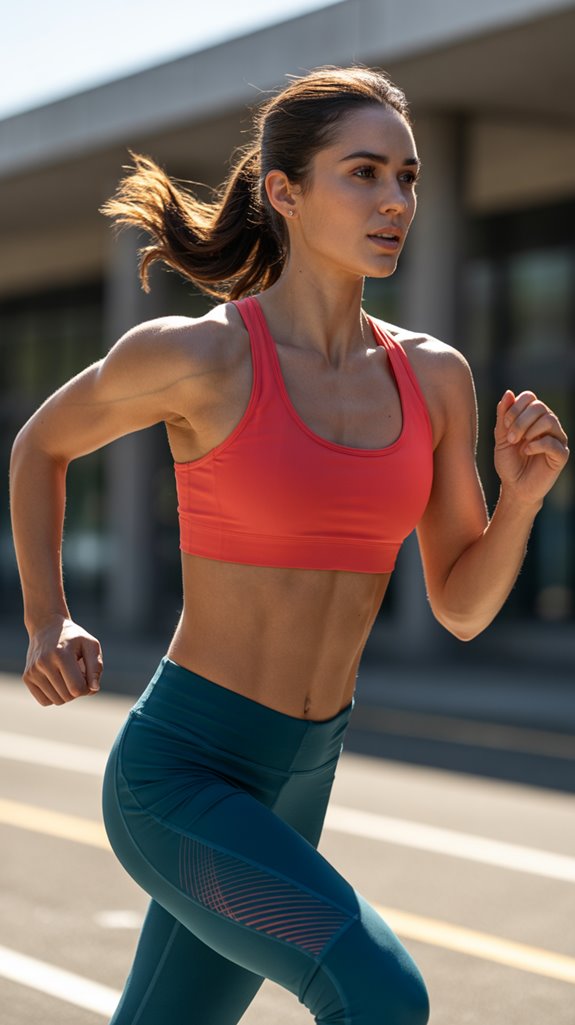
Running at a steady, challenging pace offers a straightforward yet highly effective path to burning 1,000 calories in a single session. You’ll need 75–90 minutes at 6–7.5 mph if you weigh 155–180 pounds. Your body weight directly impacts calorie burn—heavier runners expend more energy per minute. Maintaining consistent speed throughout the workout maximizes total energy expenditure, with a 155-pound person burning 600–740 calories hourly at moderate intensity.
To optimize your steady pace workout, target 6 mph (10-minute miles) for moderate fitness or 7.5 mph (8-minute miles) for advanced conditioning. Incline adds 30–50% more calorie burn. You’ll build superior aerobic capacity and cardiovascular endurance while recruiting major muscle groups. Plan hydration carefully for sessions exceeding one hour, and maintain stride consistency to sustain effort levels throughout. Consider that running against strong wind resistance requires additional effort, which can further increase your caloric expenditure during outdoor sessions. Wearing versatile activewear can help you stay comfortable and mobile throughout long runs.
High-Intensity Cycling

High-intensity cycling delivers exceptional calorie-burning potential, with riders weighing around 180 pounds expending 1,000 calories in just 60 minutes when maintaining speeds above 17.5 mph. You’ll maximize expenditure through interval techniques—alternating maximum-effort bursts with recovery periods enhances calories burned per minute. Terrain effects greatly impact your results; uphill and variable surfaces demand substantially more energy than flat roads. Your body weight directly influences burn rate, with heavier cyclists expending approximately 20% more calories than lighter riders at identical workloads. Incorporate increased resistance, whether through higher gears outdoors or greater loads on stationary bikes, to elevate heart rate and muscular demand. For ideal results, maintain sustained efforts near your aerobic threshold while integrating sprints, standing climbs, and cadence variations throughout your session. Consider pairing your cycling sessions with stylish workout gear to boost confidence and comfort during training. Heart rate monitoring through smartwatches or manual pulse checks provides real-time feedback to ensure you’re maintaining the intensity needed for maximum caloric expenditure.
Vigorous Rowing Workout
Vigorous rowing stands out as one of the most efficient calorie-burning exercises available, engaging approximately 86% of your body’s muscles simultaneously—far more than most cardiovascular activities. You’ll burn 650–800 calories per hour at 155 pounds, with heavier individuals reaching up to 1,120 calories hourly. Ideal muscle engagement requires maintaining 28–32 strokes per minute while driving 60% of power through your legs.
To hit 1,000 calories, you’ll need 60–75 minutes of vigorous effort. Incorporate HIIT protocols—alternating 30-second max efforts with 90-second recovery periods—to increase calorie burn by 25–30% and extend post-workout expenditure through EPOC. Proper technique amplifies results by 15–20%, so prioritize form: legs push, core stabilizes, back pulls, arms finish. Higher resistance combined with elevated stroke rates maximizes both cardiovascular and muscular demands. The afterburn effect can keep your metabolism elevated for up to 24 hours post-exercise, with the most significant caloric expenditure occurring in the first 12 hours after your rowing session.
Stair Climbing Sessions

While most cardio exercises operate on horizontal planes, stair climbing harnesses gravity as resistance, transforming every step into a combined cardiovascular and strength movement that burns 300–850 calories per hour.
To achieve your 1000-calorie target, you’ll need 80–120 minutes at moderate pace or 65–75 minutes climbing fast. The stair climbing benefits extend beyond simple calorie burn—you’re simultaneously building lower body strength while elevating cardiovascular capacity. The formula accounts for body weight in kilograms, which is why two people performing the same activity will experience different caloric expenditure rates.
Optimize your session with these techniques:
- Implement double-stepping or weighted vests to increase intensity by 20–50%
- Alternate fast ascents with brief recovery intervals for sustainable extended sessions
- Target 8.8+ METs through rapid climbing to maximize caloric expenditure
- Consider circuit-style approaches mixing stair work with complementary exercises
Your body weight greatly impacts results—heavier individuals burn substantially more calories per minute at identical intensities.
Swimming Laps With Mixed Strokes
Water provides twelve times the resistance of air, transforming swimming into a full-body calorie-burning powerhouse that torches 400–800 calories per hour depending on your stroke selection and intensity. To hit 1000 calories, you’ll need 60–90 minutes of vigorous mixed strokes—alternating freestyle, butterfly, backstroke, and breaststroke to recruit different muscle groups while preventing overuse injuries.
Structure your session with interval circuits: sprint 100 meters butterfly, recover with backstroke, then attack freestyle intervals. This variation maintains elevated heart rate while distributing muscular demand. Your calorie burn increases considerably with stroke switching since technique adjustments require additional effort. Swimming also strengthens the heart muscle, improving blood circulation and cardiovascular endurance throughout your workout. Heavier swimmers burn approximately 33% more calories than lighter counterparts performing identical routines. Track your splits and gradually increase butterfly segments—the most metabolically demanding stroke—to accelerate your calorie burn trajectory.
Jump Rope Training
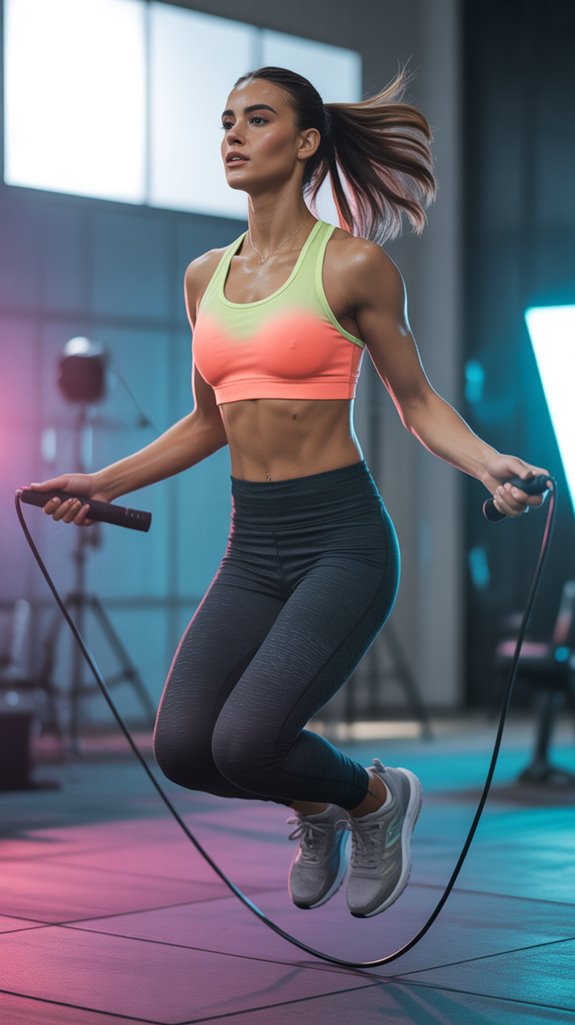
Jump rope training delivers the same calorie-crushing intensity as swimming but requires nothing more than a $10 rope and a 6×6 foot space. You’ll burn 14–20 calories per minute depending on your weight and pace, with vigorous sessions reaching 12.3 METs. Mastering advanced rope techniques elevates both calorie efficiency and coordination demands.
To hit 1,000 calories, you’re looking at 50–80 minutes of sustained jumping. Break this into intervals:
- Moderate pace (100–120 skips/min): 56–80 minutes total
- Vigorous pace (>120 skips/min): 50–60 minutes total
- HIIT protocol: 30-second sprints with 15-second rest periods
- Weighted rope: increases resistance and caloric output
Your body weight directly impacts expenditure—heavier individuals burn considerably more calories per session at identical intensities. For example, a 200-pound person will burn 563 calories in 30 minutes, while a 150-pound person burns 422 calories in the same timeframe.
Kickboxing and Combat Sports

Because kickboxing and combat sports engage your entire body through explosive strikes and defensive maneuvers, they rank among the highest calorie-burning workouts available—delivering 500–1,000 calories per hour depending on your weight and intensity. A 185-lb person can reach that 1,000-calorie threshold through sustained effort.
Mastering kickboxing techniques requires alternating punches, kicks, combinations, and defensive moves across aerobic and anaerobic phases. You’ll drill on bags, spar with partners, and incorporate bodyweight conditioning that challenges strength, agility, and balance simultaneously. Combat sports benefits extend beyond calorie expenditure—you’ll build cardiovascular endurance, develop practical self-defense skills, and maintain lean muscle while torching fat. The rapid movements also create an afterburn effect (EPOC) that continues burning calories even after your workout ends.
Calculate your burn using the MET formula (kickboxing = 10.0 MET) for precise tracking. Increase intensity, duration, and frequency to maximize results consistently.
Circuit Training Routines

Circuit training routines deliver one of the most efficient paths to burning 1,000 calories in a single session by rotating through multiple exercises with minimal rest between stations. You’ll maintain an elevated heart rate throughout by combining compound lifts, plyometrics, and cardio bursts—typically burning 10-13 calories per minute at high intensity.
Strategic circuit variations amplify your calorie expenditure:
- Tabata protocols: 20-second maximum effort intervals with 10-second rest periods
- EMOM formats: Complete prescribed reps every minute on the minute
- Compound-dominant circuits: Prioritize squats, deadlifts, and burpees for maximum muscle recruitment
- Resistance-loaded stations: Incorporate dumbbells, kettlebells, or medicine balls to increase metabolic demand
Most exercisers need 60-90 minutes of sustained effort with effective exercise combinations to reach the 1,000-calorie threshold, plus additional calories from post-workout EPOC. Rather than attempting this intensity daily, treat these sessions as occasional fitness challenges that complement a balanced training program focused on long-term sustainability.
CrossFit and Strength-HIIT Combinations

When you combine CrossFit’s functional movements with strategic HIIT intervals, you’ll create one of the most potent calorie-burning environments available—routinely torching 1,000 calories in 60-75 minutes through relentless muscle recruitment and cardiovascular demand.
Master CrossFit techniques like sumo deadlifts, kettlebell swings, and Olympic lifts paired with explosive bursts of burpees and mountain climbers. Your strength circuit design should rotate compound movements through minimal rest periods, maintaining elevated heart rates throughout.
Implement EMOM workouts to drive volume and intensity—perform designated reps each minute, using remaining time for recovery. Alternate between heavy barbell complexes and bodyweight plyometrics for maximum caloric burn strategies. Remember that individual calorie burn will vary based on your fitness level and the intensity you bring to each movement.
The afterburn effect extends your metabolic elevation for hours post-workout. Structure sessions using AMRAP formats, progressive overload, and constantly varied movements to prevent adaptation while maximizing expenditure.
Conclusion
You’ve got ten powerhouse workouts that’ll torch serious calories and transform your fitness journey. Whether you’re jumping rope, crushing HIIT sessions, or rowing your heart out, consistency is what’ll get you results. Remember, Rome wasn’t built in a day—you’ll need dedication and patience to reach your goals. Pick the workouts that excite you most, listen to your body, and don’t forget proper nutrition fuels everything. Now it’s time to lace up those sneakers and start burning!