This post contains affiliate links. As an Amazon Associate I earn from qualifying purchases.
You’ll transform your fitness with these at-home Pilates workouts that require nothing more than a mat and floor space. Start with core-strengthening roll-ups and single leg stretches to engage deep abdominals, then progress to criss-cross moves for oblique definition and toe taps for lower ab isolation. Don’t overlook pelvic floor activation for back pain relief and hip flexor work to enhance coordination. Practice two to three sessions weekly for sustained improvement, and you’ll discover how these beginner-friendly, low-impact routines build strength while protecting your joints through proper technique and mindful breathing.
Key Takeaways
- Roll-ups and single leg stretches strengthen deep core muscles while promoting spinal flexibility with minimal equipment needed.
- Criss-cross and toe taps target obliques and lower abs, offering effective progression through tempo variations and controlled repetitions.
- Spinal rotation exercises combine breathing with twisting movements to release tension and improve mobility for stress relief.
- Hip flexor training through leg circles and side-lying lifts addresses tightness from sitting while reducing injury risk.
- Beginner-friendly mat sequences require only floor space, building core stability through pelvic tilts and modified planks consistently.
Core-Strengthening Roll-Up for Spinal Mobility
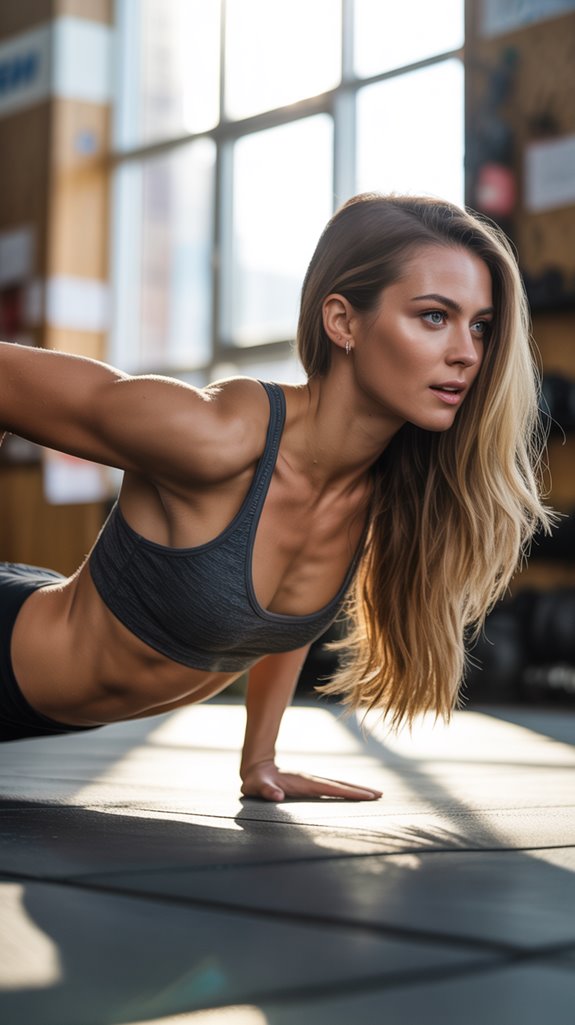
The roll-up’s power lies in its dual action: strengthening deep abdominal layers while promoting spinal flexibility through complete articulation. As you reach forward at the movement’s peak, you’ll stretch your hamstrings and challenge your hip flexors simultaneously. This movement engages the rectus abdominis, transverse abdominis, and obliques to protect and support your spine throughout the exercise. Master proper technique by dorsiflexing your feet, extending your arms forward, and exhaling during the roll. Beginners can modify with bent knees until strength develops. Many practitioners also find that incorporating consistent practice helps accelerate progress and improve overall mobility.
Single Leg Stretch to Engage Deep Abdominals
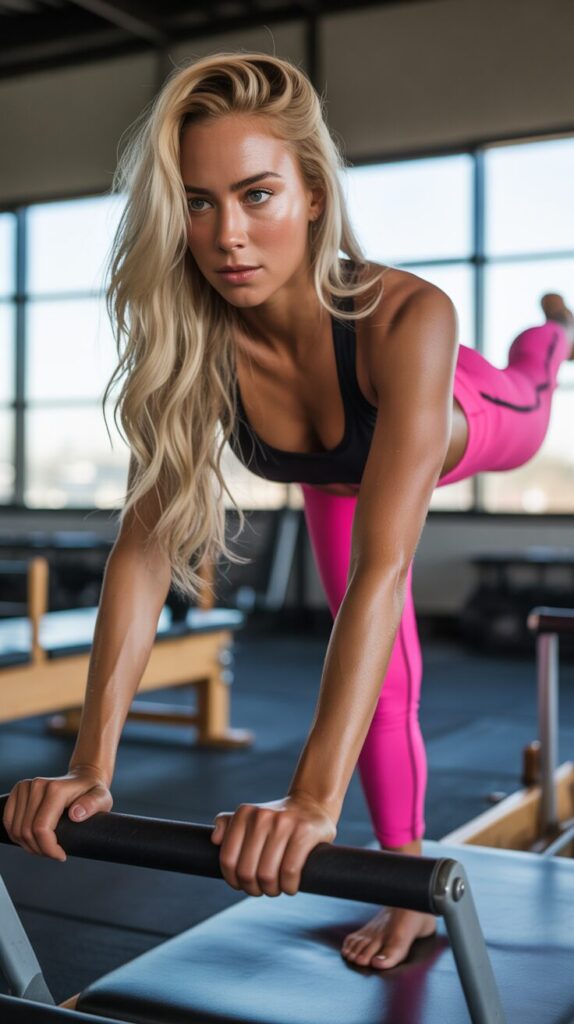
Single leg stretch delivers targeted abdominal work by combining static upper body positioning with dynamic leg movement—a combination that forces your deep core muscles to fire continuously. You’ll maintain shoulders lifted while alternating legs in a controlled switching pattern, demanding unwavering core stabilization throughout. Your transverse abdominis and rectus abdominis work overtime to press your lower back into the mat, protecting your lumbar spine while your legs cycle through space. This consistent engagement builds endurance in core muscles over time, creating lasting strength that supports daily activities. Practicing at home makes it easy to maintain consistency and enjoy engaging home workouts that fit your schedule.
Technique essentials:
- Position hands outside ankle and inside knee of bent leg, pulling knee toward cheekbone for ideal tracking
- Keep extended leg hovering inches off floor with pointed toes
- Maintain C-curve spine position through deliberate abdominal contraction
- Coordinate breath—inhale for one complete cycle, exhale for the next
- Minimize torso movement while maximizing hip mobility and oppositional stretch
Criss-Cross Exercise for Oblique Definition
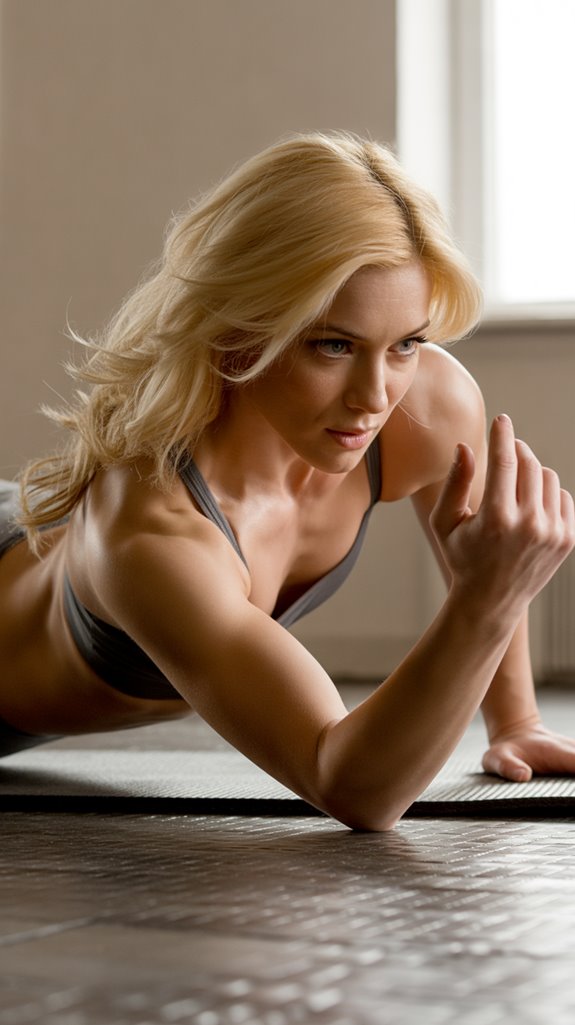
While single leg stretch builds foundational core control through linear leg movements, criss-cross amplifies that challenge by introducing rotation—a pattern that ignites your obliques and sculpts definition through the sides of your waist. This oblique training essential demands lumbo-pelvic stability as you alternate bringing each knee toward your chest while rotating your ribcage to meet the opposite shoulder. You’ll rotate from deep within your torso—not just your elbow—engaging transversus abdominis and supporting spinal mobility. Maintain steady breathing: exhale during rotation, inhale on the switch. Exercise variations include elevating your legs for modified difficulty or lowering your extended leg to intensify the challenge. Execute 8–10 reps per side, keeping your pelvis stable and avoiding neck strain. This functional movement pattern strengthens postural muscles while enhancing coordination and reducing injury risk in rotational activities. Consistent practice combined with targeted workouts and proper nutrition helps reduce love handle fat and reveal oblique definition. As you master the basics, advanced practitioners can slow the tempo to magnify time under tension and deepen muscle engagement.
Toe Taps for Lower Abdominal Isolation
Targeting your lower abdominals with precision requires an exercise that minimizes hip flexor involvement while maximizing core engagement—and toe taps deliver exactly that isolation. You’ll position yourself supine with legs in tabletop, then alternately lower each foot to tap the floor while maintaining a neutral spine. The key is initiating movement from your lower abs rather than your quads or hip flexors.
Essential execution guidelines:
- Start with 8–10 controlled reps per side, emphasizing slow tempo over speed
- Keep your pelvis stable to prevent sideways tipping or excessive arching
- Exhale as you pull your belly button inward for spinal support
- Progress to toe tap variations like simultaneous taps or weighted holds for advanced challenge
- Maintain minimal range initially, expanding gradually as core stability improves
- This exercise engages your obliques along with the rectus and transverse abdominis for comprehensive core development
Standing Side-Kick Series for Glutes and Balance
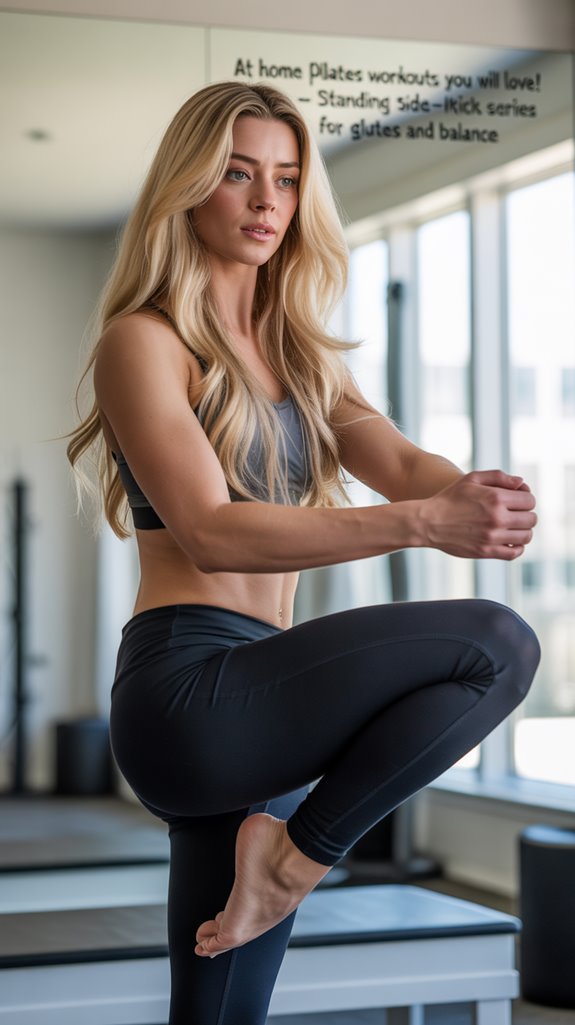
Because your glutes serve as the powerhouse for lateral movement and stabilization, the standing side-kick series delivers targeted strengthening that translates directly to everyday mobility and athletic performance. You’ll activate your gluteus medius and maximus through controlled hip abduction while simultaneously demanding core stability to maintain vertical spine alignment.
Execute kicks with deliberate tempo, keeping your shoulders and hips square as you create a “pocket of air” beneath your side waist. This glute engagement intensifies when you progress from short-lever to long-lever variations, adding ankle weights or incorporating circles for advanced challenge. Prioritize smaller, controlled movements over larger swings that compromise your spinal stability and core engagement.
The single-leg stance inherent to this series produces measurable balance improvement, reducing fall risk and enhancing proprioception. You’ll develop the lateral hip strength essential for athletic movements while refining postural control that carries over to functional daily tasks.
Spinal Rotation for Daily Stress Relief
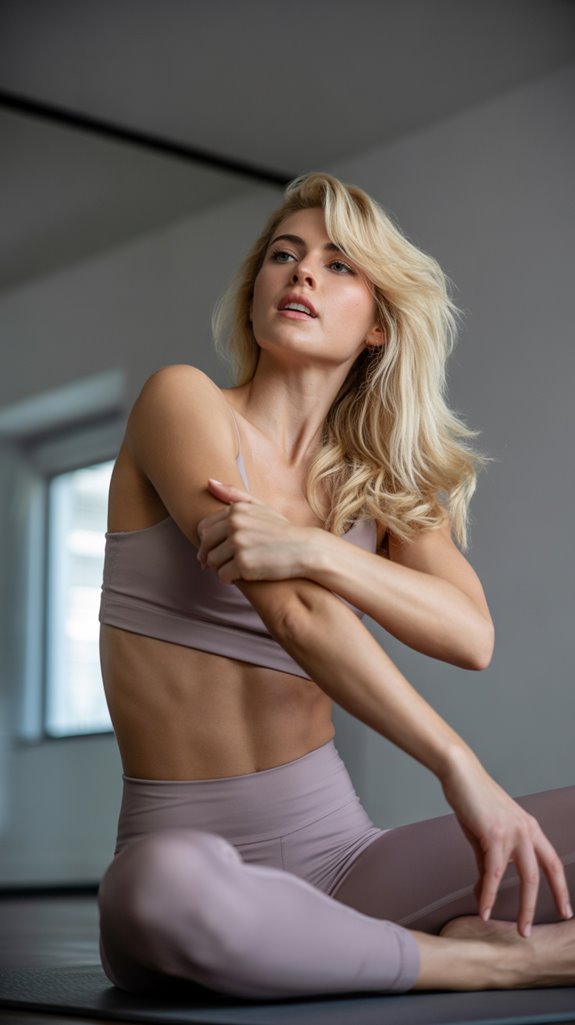
Your spine holds tension from every stressful moment—hunched shoulders during deadlines, twisted postures while checking your phone, rigid positioning during difficult conversations. Pilates spinal rotation releases this accumulated stress through controlled, mindful movement that activates your parasympathetic nervous system.
These rotational exercises function as powerful mindfulness techniques, combining concentrated breathing with deliberate spinal twisting to reduce muscle tension and stress-induced spasms. Regular practice strengthens your stress management toolkit while enhancing proprioceptive awareness. By engaging the transverse rotational plane, spine twists address a dimension of spinal health often neglected in other exercise modalities.
Key stress-relief mechanisms include:
- Deep breathing synchronized with rotation to trigger relaxation responses
- Oblique and core activation that releases tension held in your torso
- Improved spinal mobility reducing chronic stiffness patterns
- Enhanced body awareness for recognizing and releasing daily tension
- Accessible modifications ensuring consistent practice regardless of fitness level
This mind-body integration builds emotional resilience through physical release.
Pelvic Floor Activation for Back Pain Relief
When chronic back pain disrupts your daily life, the solution might lie in muscles you’ve never consciously engaged—your pelvic floor. This often-overlooked muscle group forms your body’s “inner core unit,” directly stabilizing your spine and reducing pain severity.
Research confirms that combining pelvic floor exercises with standard back pain therapy markedly decreases disability scores. Start with contract-relax repetitions: tighten for 3–5 seconds, release, and repeat ten times. Progress to “elevator exercises,” gradually increasing contraction intensity before slowly descending. Coordinate these movements with your breath—contract during exhalation, relax during inhalation.
For enhanced results, integrate pelvic floor activation with functional movements like bridges and squats. You can also incorporate transverse abdominis activation alongside these exercises to further facilitate pelvic floor engagement. This neuromuscular control doesn’t just alleviate current discomfort; it reduces recurrence risk and restores pain-free movement patterns.
Hip Flexor Work for Enhanced Coordination
While most people associate core stability with abdominal muscles, your hip flexors play an equally critical role in coordinated movement. These muscles initiate leg drive and facilitate force transfer between your lower and upper body, directly impacting movement efficiency. When you’ve got tight or weak hip flexors from prolonged sitting, you’ll develop compensatory patterns that compromise coordination and increase injury risk. Weak hip flexors may also contribute to pain in conditions like knee osteoarthritis, making targeted strengthening even more essential.
Pilates-based hip flexor training addresses these limitations through controlled, progressive exercises:
- Leg circles and side-lying lifts strengthen hip flexors while maintaining pelvic alignment
- Banded psoas marches engage stabilizing muscles for coordinated leg motion
- Dynamic hip stretches balance strength work with essential mobility
- Continuous flows enhance neuromuscular timing and rhythm
- Low-impact resistance protects joints while building hip flexibility
You’ll notice improved explosive power, single-leg stability, and enhanced agility as your hips operate smoothly through fuller ranges of motion.
Full-Body Mat Sequence for Muscle Endurance
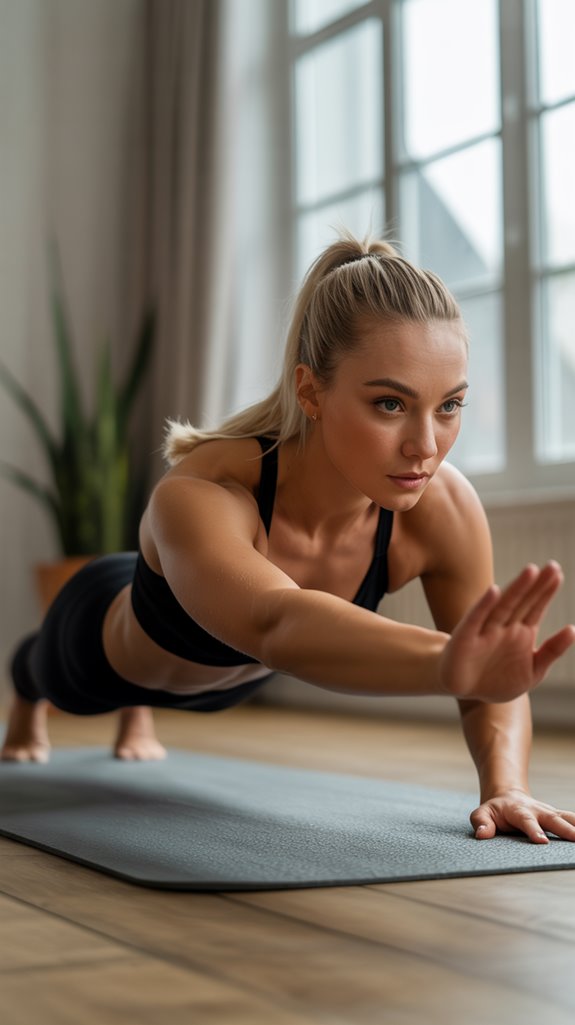
A complete mat sequence brings together everything you’ve developed—core stability, hip mobility, and controlled movement—into one efficient workout that builds endurance across your entire body. You’ll engage deep stabilizers while targeting quads, hamstrings, glutes, biceps, triceps, and obliques through controlled, high-rep movements. This 30-minute fusion approach combines strength training with traditional pilates moves like the Hundred, challenging multiple muscle groups simultaneously without joint strain.
Structure your session with proper workout variations: begin with warmup movements, progress through lower-body targeting, flow into upper-body work, and finish with core sequences. Take 20-40 seconds between exercises and 90 seconds to two minutes between complete rounds for adequate muscle recovery. You’ll build endurance efficiently while maintaining the precision and control that defines quality pilates practice. Light to medium dumbbells ranging from 2-15 pounds can enhance the workout, though bodyweight modifications remain effective for all fitness levels. Schedule these sessions 1-2 times weekly for best results.
Beginner-Friendly Low-Impact Routine
Starting your pilates journey doesn’t require advanced skills or specialized equipment—just a mat, some floor space, and commitment to consistent practice. You’ll build core stability through controlled movements that protect your joints while developing proper alignment. Focus on engaging deep abdominal and pelvic floor muscles during each exercise, breathing mindfully to enhance the mind-body connection. Practice two to three sessions weekly to maintain consistency and progress in your routine.
Essential elements for your beginner routine:
- Pelvic tilts and bridges activate core stabilizers without straining your lower back
- Modified planks from knees build foundational strength safely
- Spinal stretches improve flexibility and counteract daily slouching patterns
- Beginner modifications let you scale intensity as your body adapts
- Minimal workout equipment keeps practice accessible and sustainable
This approach reduces injury risk while establishing movement patterns that’ll serve your long-term progression.
Conclusion
You’ve discovered your own treasure map to core strength and flexibility—no studio membership required. Like Dorothy clicking her ruby slippers, you’ve had the power all along to transform your body from your living room. These ten Pilates workouts aren’t just exercises; they’re your golden ticket to improved posture, reduced pain, and that coveted dancer’s grace. Roll out your mat and start your journey today—your stronger self is waiting.