This post contains affiliate links. As an Amazon Associate I earn from qualifying purchases.
You’ll transform your lower body with exercises targeting explosive power, balance, and functional strength. Start with goblet squats and Bulgarian split squats for unilateral development, then add Romanian deadlifts and hip thrusts to build your posterior chain. Single-leg deadlifts enhance proprioception while box jumps develop athletic explosiveness through the stretch-shortening cycle. Round out your routine with walking lunges, glute bridges, and standing calf raises to strengthen everything from your core to your calves. The complete breakdown below reveals how each movement maximizes your results.
Key Takeaways
- Single-leg deadlifts enhance balance, core stability, and proprioception while correcting strength imbalances and reducing injury risk.
- Box jumps develop explosive power through the stretch-shortening cycle, potentially increasing vertical jump height by 5–10 centimeters.
- Romanian deadlifts and glute bridges strengthen the posterior chain, improve hip stability, and reduce lower back pain.
- Standing calf raises target gastrocnemius and soleus muscles, improving jumping mechanics, explosive power, and functional mobility.
- Single-leg variations and eccentric training build flexibility under load while enhancing strength and reducing strain from muscle tightness.
Goblet Squats for Core Stability and Leg Power
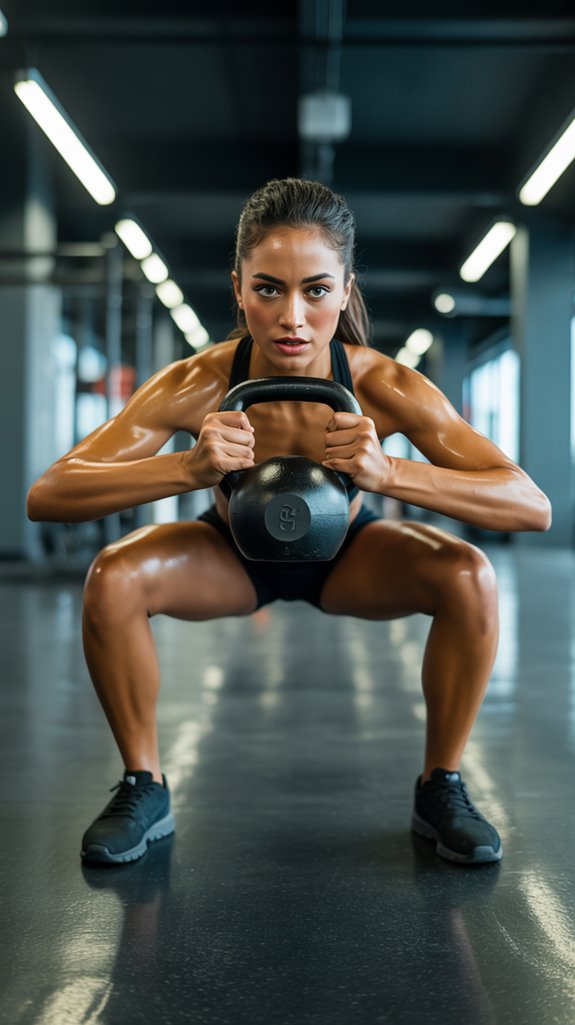
When you’re looking to build a stronger foundation for your lower body training, goblet squats deliver an efficient combination of core stability work and leg power development. The front-loaded weight position demands exceptional core activation strategies, forcing your abdominal and spinal stabilizers to work harder than traditional back squats. You’ll maintain an upright torso throughout the movement, preventing forward or backward tipping while building transferable strength for compound lifts. Incorporating goblet squats into a routine alongside other targeted exercises can help you create a varied leg workout program that addresses multiple performance goals.
Your quadriceps and glutes receive extensive stimulus as you progress through deeper ranges of motion. Squat depth benefits extend beyond muscle building—you’ll enhance hip and ankle mobility while reducing spinal compression. This beginner-friendly exercise scales effectively across fitness levels, developing functional strength that translates directly to daily activities and athletic performance without overloading your lower back. The movement also engages your calves, creating a comprehensive lower body workout that targets multiple muscle groups simultaneously.
Bulgarian Split Squats to Build Unilateral Strength
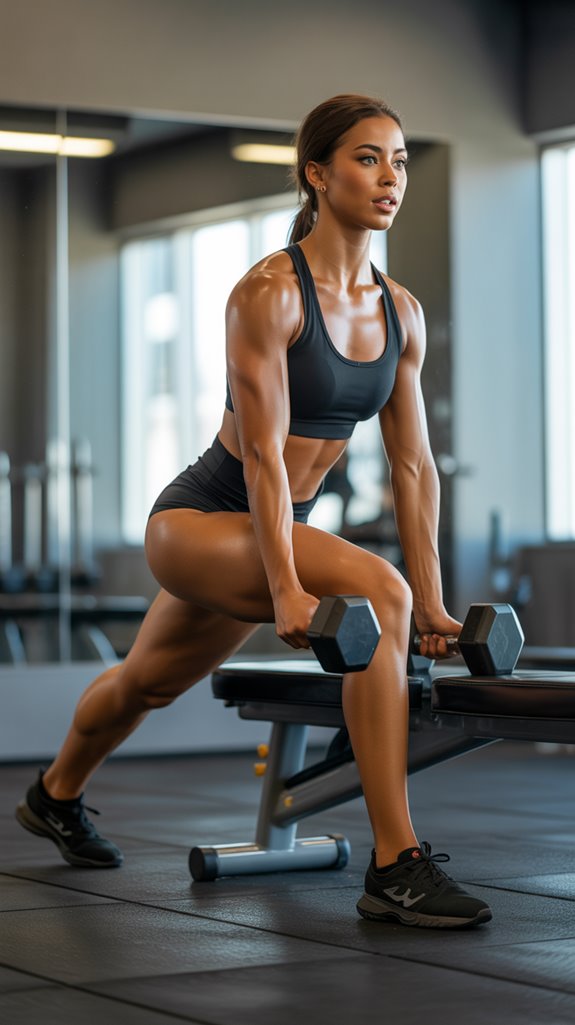
By elevating your rear foot and loading most of your weight onto a single leg, Bulgarian split squats force each limb to independently generate 70-85% of the movement’s total force demands. This unilateral activation targets your quads, glutes, hamstrings, adductors, and abductors while exposing and correcting muscle imbalances that bilateral movements often mask. The exercise’s extended range of motion maximizes hip extension and joint mobility, directly transferring to sprinting, jumping, and explosive athletic performance. You’ll experience enhanced core stability as your trunk works to maintain pelvic alignment throughout each rep. The movement minimizes spinal loading compared to traditional squats, making it valuable if you’re managing back issues. Scale intensity through dumbbell, barbell, or bodyweight variations to match your training phase—whether you’re pursuing strength, hypertrophy, or injury prevention. Aim to complete 8-12 repetitions per leg for three sets to effectively build muscle and strength in your lower body. Many gym programs include Bulgarian split squats as a staple for developing lower body strength and balance.
Romanian Deadlifts for Posterior Chain Development
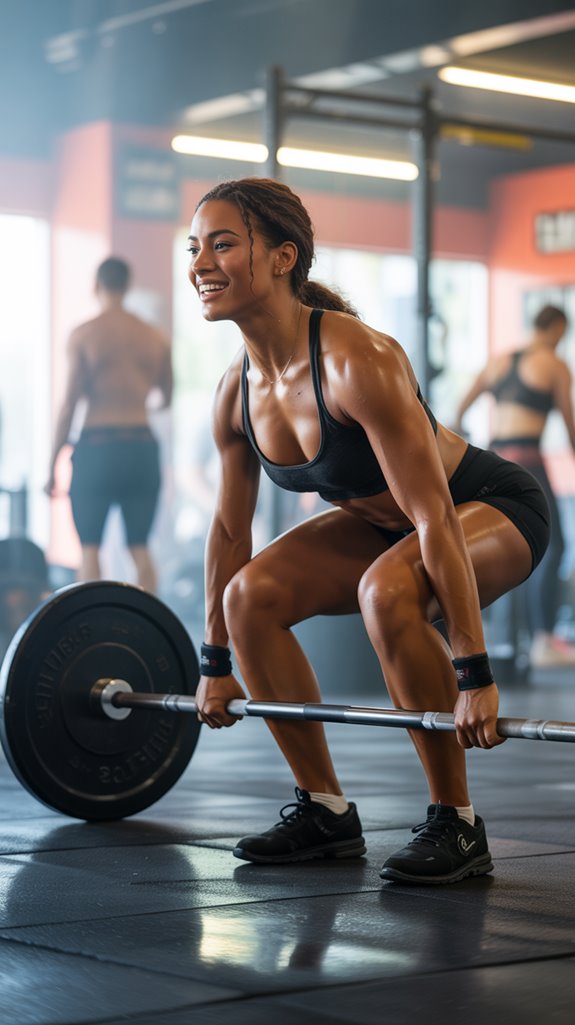
Romanian deadlifts transform your posterior chain by loading the hamstrings, glutes, and erector spinae through a hip-dominant hinge pattern that prioritizes eccentric muscle lengthening over the concentric lifting phase. This eccentric muscle engagement drives hypertrophy while building functional strength that translates directly to sprinting, jumping, and explosive athletic movements. Romanian deadlifts benefits extend beyond muscle development—you’ll strengthen grip, enhance hip hinge mechanics, and reduce lower back injury risk through improved spinal stabilization. Begin from a standing position with slight knee flexion and neutral spine alignment, controlling the descent to maximize tension. Keep the weights close to the body as you lower them down the front of your legs to maintain proper form and maximize posterior chain engagement. The movement’s controlled range and reduced lower back strain make it safer than conventional deadlifts while delivering superior posterior chain stimulation. Progress gradually to optimize results while maintaining proper form throughout each repetition. For variety and to further target the glutes, consider adding glute bridges into your routine.
Hip Thrusts for Maximum Glute Activation
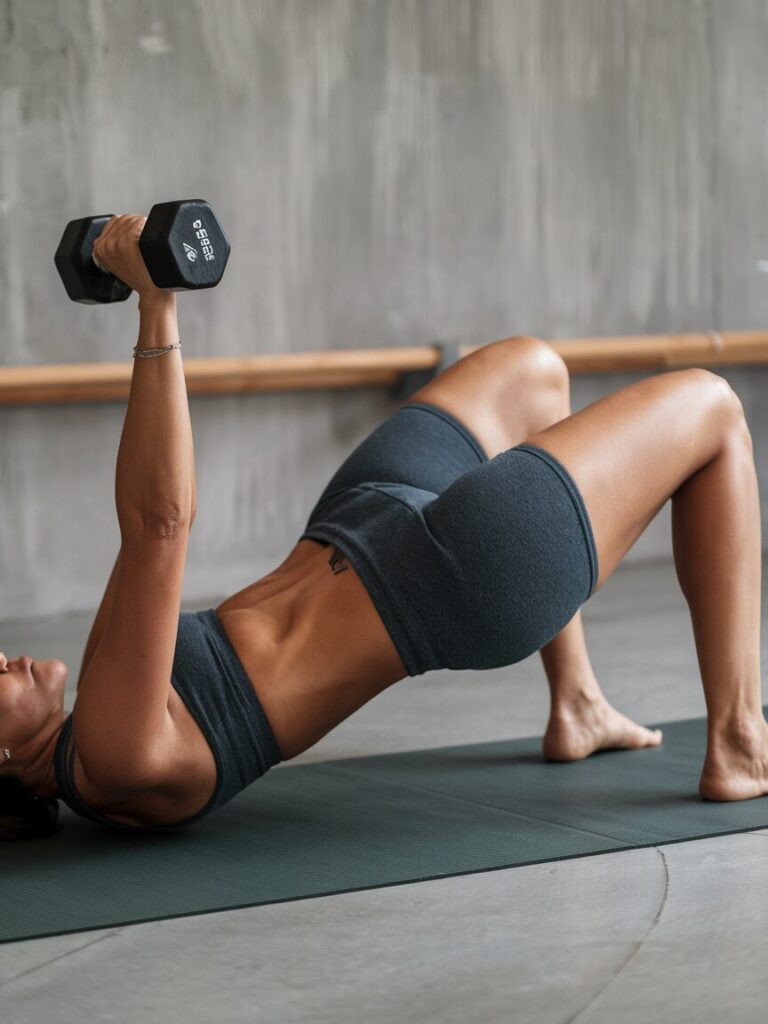
While Romanian deadlifts excel at developing the entire posterior chain, hip thrusts target your glutes with unmatched precision and activation intensity. EMG analyses reveal hip thrust benefits that surpass squats and deadlifts—specifically, superior glute activation through ideal hip extension mechanics. You’ll recruit your gluteus maximus first, followed by erector spinae, hamstrings, and quadriceps in a coordinated excitation sequence.
This compound movement delivers measurable performance gains: shortened sprint times, increased power output, and enhanced explosiveness for athletic endeavors. Beyond aesthetics, you’re building functional strength for postural stability, walking, running, and jumping while preventing lower back and knee injuries through better muscular balance.
Execute hip thrusts with progressive overload using barbells, bands, or bodyweight variations. Starting with your upper back on a bench, position your feet flat on the floor and lift your hips to a tabletop position, pausing to squeeze your glutes at the top. Whether you’re pursuing hypertrophy, rehabilitation, or athletic performance, you’ll achieve noticeable glute development within weeks of consistent training.
Walking Lunges to Enhance Mobility and Muscle Growth
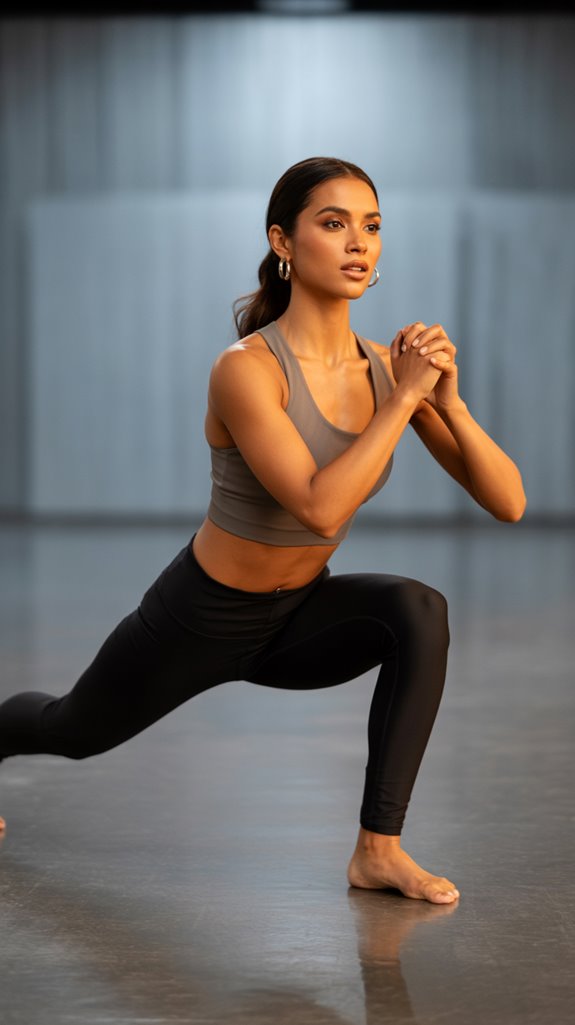
Walking lunges deliver thorough lower-body development through dynamic, multi-planar movement that simultaneously builds muscle and enhances mobility. You’ll activate your quadriceps, glutes, hamstrings, and calves while engaging your core for stabilization. The unilateral pattern guarantees balanced muscle recruitment between legs, eliminating strength disparities that compromise performance.
The mobility benefits extend beyond simple flexibility gains. You’ll develop hip mobility through full range of motion, counteracting tightness from prolonged sitting while reducing lower back tension. This open kinetic chain movement improves joint function across your hips, knees, and ankles. Maintain controlled descent to maximize muscle engagement during the eccentric phase of each repetition.
You’ll also enhance proprioception and balance as each step demands precise neuromuscular control. Progressive overload through added resistance accelerates hypertrophy while strengthening connective tissues, reducing injury risk. The cardiovascular stimulus from compound muscle recruitment elevates calorie expenditure, supporting both conditioning and compositional goals.
Kettlebell Swings for Explosive Hip Power
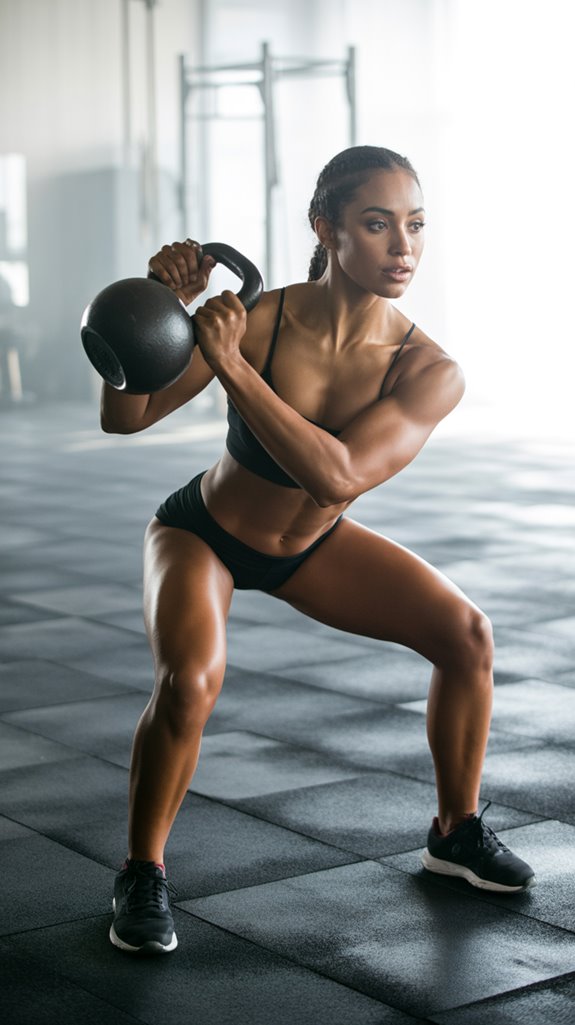
Kettlebell swings generate explosive hip power through ballistic hip extension, recruiting your glutes and hamstrings as primary force drivers while simultaneously strengthening your entire posterior chain. You’ll develop explosive strength that translates directly to sprinting, jumping, and athletic performance—studies confirm improvements in vertical jump height and single-rep max strength.
Master proper hip mechanics by emphasizing the hip hinge over squat patterns while maintaining a neutral spine throughout the movement. This technical precision guarantees safe force transfer and prevents injury. You’re simultaneously building cardiovascular fitness, as swings elevate your heart rate to 87% of maximum, creating HIIT-style metabolic conditioning.
High-repetition sets challenge both muscular power and endurance while enhancing core stability, dynamic balance, and functional movement patterns essential for everyday activities and advanced athletic pursuits. The exercise requires minimal space, making it ideal for home workouts or crowded gym environments where traditional lower body exercises may be impractical.
Single-Leg Deadlifts for Balance and Stability
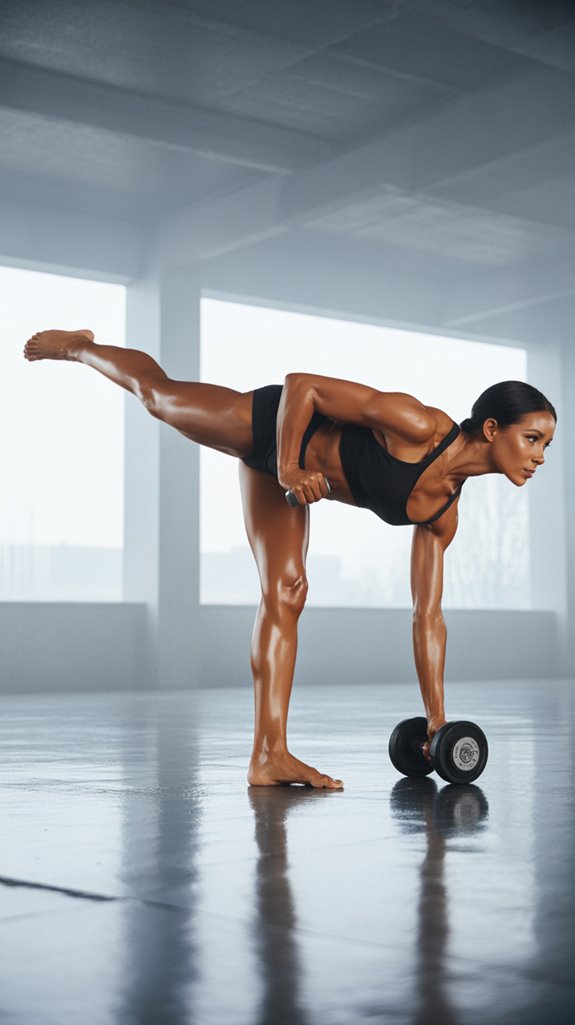
Single-leg deadlifts transform your balance and stability by forcing your body to coordinate three primary sensory systems—vision, somatosensory feedback, and vestibular function—while you’re balancing on one leg under load. This makes them superior balance training compared to bilateral movements.
You’ll activate your hamstrings and glutes intensely while engaging foot intrinsics, calves, and core stabilizers. The unilateral nature exposes strength asymmetries, forcing your weaker side to match your stronger side’s output. This correction improves movement mechanics and reduces injury risk.
As you lower the weight, you’ll stretch your hamstrings and hip flexors under eccentric tension, building flexibility alongside strength. The controlled eccentric phase promotes muscle lengthening, reducing the risk of strains from tightness. These stability exercises enhance proprioception—your body’s spatial awareness—translating directly to athletic performance, fall prevention, and functional movement patterns in daily activities.
Box Jumps to Boost Athletic Performance
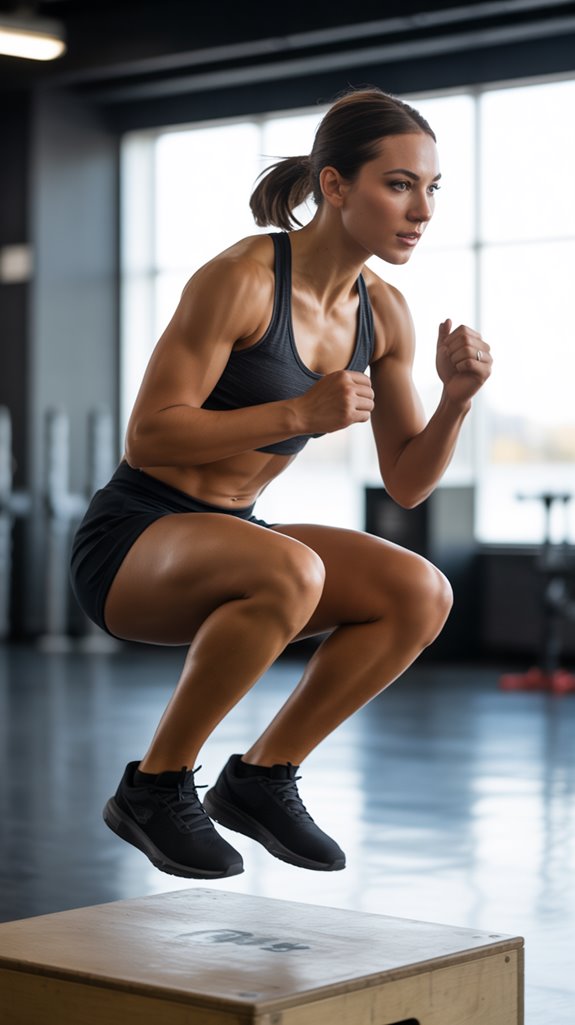
When you explode upward onto a box, you’re harnessing your body’s stretch-shortening cycle—a rapid muscle lengthening followed by forceful contraction that stores and releases elastic energy like a coiled spring. This mechanism drives explosive power gains that transfer directly to athletic performance.
Research demonstrates jump training increases vertical jump height by 5.2–9.9 cm, with high-intensity protocols yielding effect sizes of 0.918. You’ll develop superior neuromuscular coordination and motor unit recruitment, enabling faster force development.
Surprisingly, box height matters less than your jump intention. Recreationally trained athletes show equivalent performance across heights up to 80% maximal. Start with 60% maximal height to master landing mechanics, then progress volume beyond 80 jumps per session. Prioritize low reps per set to maintain explosive quality and technique precision. Female athletes demonstrate higher peak force at 80% maximal box height compared to ground-level jumps, suggesting potential strength adaptation benefits at elevated heights.
Glute Bridges for Stronger, Healthier Hips
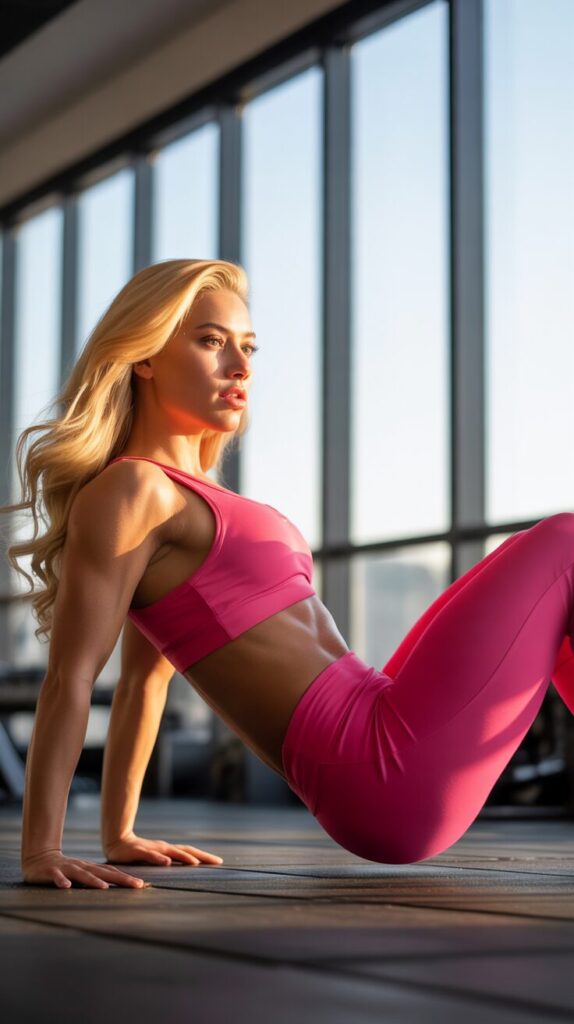
You’ll strengthen your posterior chain while reducing lower back pain and improving lumbopelvic alignment. Research confirms that verbal cues like “squeeze glutes” amplify muscle recruitment and minimize compensatory movement. The bridge’s accessibility requires zero equipment yet delivers compound benefits: hip stability, core engagement, and athletic performance enhancement. You can adjust foot placement to emphasize different muscles, positioning your feet closer to your body for maximum glute activation or further away to engage your hamstrings more intensely. Whether you’re rehabilitating from injury or optimizing sprint mechanics, mastering this movement pattern builds resilient, functional strength throughout your entire kinetic chain.
Standing Calf Raises for Lower Leg Strength
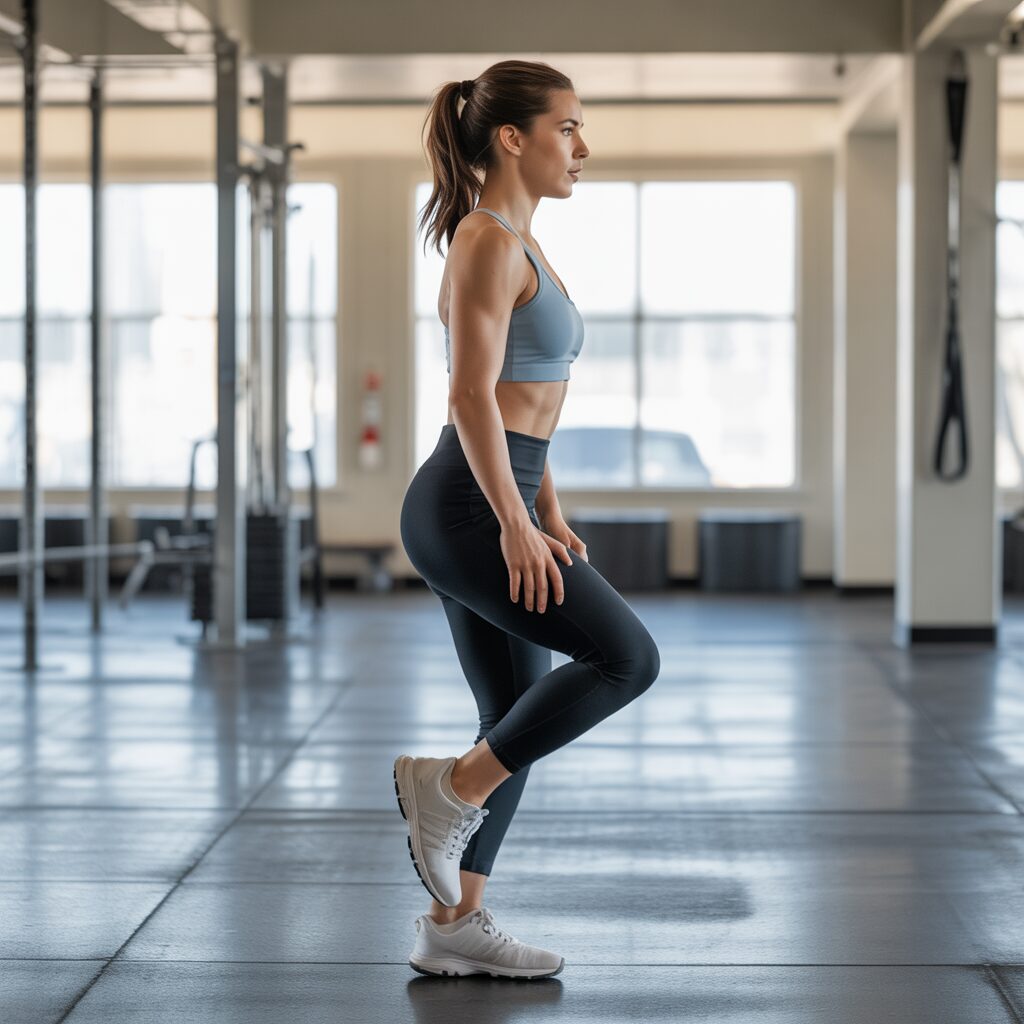
To maximize calf muscle activation, you’ll need controlled tempo and strategic progression. Single-leg variations and substantial resistance—think 70-80 pounds—are essential for hypertrophy, given your calves’ daily workload tolerance. Toe-out positioning recruits different muscle fibers for complete development.
Beyond aesthetics, standing calf raises enhance explosive power, jumping mechanics, and functional mobility. You’re training natural plantarflexion patterns that translate directly to running, cycling, and stair-climbing performance. The exercise primarily targets the gastrocnemius and soleus muscles, which connect to the Achilles tendon and are crucial for all leg movements.
Conclusion
You’ve now got the blueprint to forge legs of steel and glutes that could crack walnuts. These ten exercises aren’t just movements—they’re your ticket to unleashing explosive power and rock-solid stability. Don’t let this knowledge gather dust; lace up those trainers and transform your lower body into a powerhouse. Remember, champions aren’t born in comfort zones—they’re sculpted through sweat, dedication, and consistently showing up. Your journey starts now.