You’ll transform your core with these 10 Kazuha-inspired workouts that blend ballet grace with explosive power. Start with dynamic warm-up stretches, then progress through Russian twists (2–3 sets of 8–16 reps), oblique-targeting side planks, and lower ab isolation techniques like hanging leg raises. Add high-intensity cardio circuits burning 12–16 calories per minute, scissor kicks, cross V-ups, and challenging plank variations. Maintain proper form with controlled breathing and posterior pelvic tilts for maximum results. The complete breakdown below reveals specific techniques and progression strategies for each movement.
Key Takeaways
- Russian twists and plank variations build functional core strength through 2–3 sets of controlled repetitions with proper spinal alignment.
- Lower ab exercises like hanging leg raises and reverse crunches isolate muscles using posterior pelvic tilt and slow, controlled movements.
- Dynamic movements including cross V-ups and alternating V-ups engage multiple muscle groups through explosive, coordinated core contractions.
- Side plank series activates 40% more oblique fibers through variations like leg lifts, held for 40 seconds per side.
- High-intensity cardio core circuits burn 12–16 calories per minute using 30/30 intervals, training 2–4 times weekly for optimal results.
High-Intensity Cardio Core Circuit for Maximum Calorie Burn
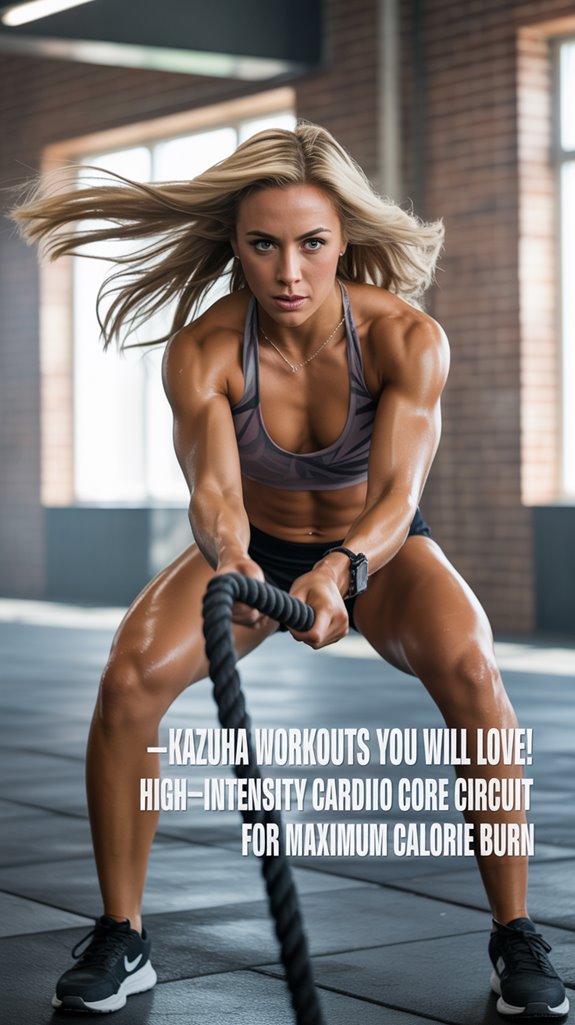
When you’re short on time but need serious results, high-intensity cardio core circuits deliver maximum calorie burn by fusing explosive movements with targeted abdominal work. You’ll torch 12–16 calories per minute while simultaneously building trunk stability through compound exercises like rotational mountain climbers and jackknife crunches. Circuit design matters: structure your sessions using 30/30 or 20/10 work-rest ratios to maximize both exertion and recovery. HIIT benefits extend beyond the workout itself—you’ll experience up to 30% greater post-exercise oxygen consumption compared to steady-state cardio. Focus on bodyweight movements that engage multiple muscle groups: skater hops for lateral power, push-ups with shoulder taps for anti-rotation strength, and woodchoppers for oblique development. Train 2–4 times weekly, completing 15–37 minute sessions that boost VO2 max while sculpting your core. These circuits challenge your core through rotation and anti-rotation, developing both dynamic movement capacity and isometric tension control that translates directly to improved athletic performance. Incorporating a variety of exercises helps maintain enjoyment and ensures workouts are accessible to all fitness levels.
Ballet-Inspired Stretches to Prep Your Body and Mind
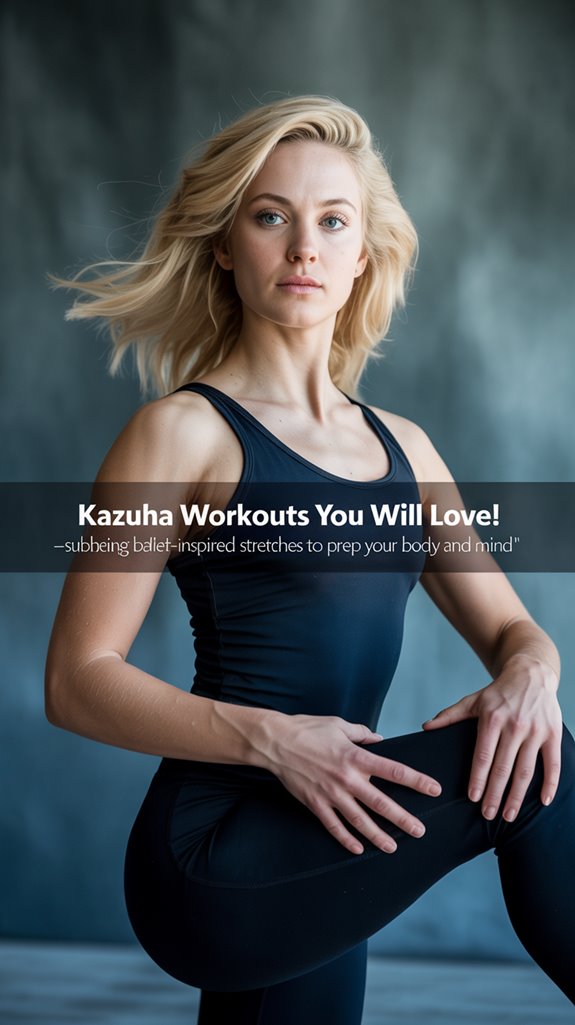
Before your workout begins, ballet-inspired stretches create the ideal physical and mental foundation by combining graceful movements with intentional breathwork. You’ll experience immediate ballet benefits through dynamic stretching that elevates muscle temperature and neuromuscular readiness, priming your body for intense movement without compromising power output.
Master flexibility techniques by incorporating hip openers, pliés, and overhead reaches that enhance range of motion while establishing spinal alignment. These movements strengthen your core and improve postural control, counteracting sedentary lifestyle effects. You’ll develop greater body mindfulness through concentrated, precise positioning that sharpens coordination and cognitive function. Proprioceptive neuromuscular facilitation techniques like contract-relax patterns can offer greater advantages in increasing your range of motion compared to static approaches.
Allow 10 minutes for best tissue extensibility, focusing on controlled breathing to reduce stress and tension. This systematic approach cultivates the mind-body connection essential for maintaining technical form throughout demanding sequences, ensuring you’re physically and mentally prepared for performance. Incorporate mat pilates exercises afterward to reinforce core stability and mobility gains.
Lower Ab Isolation With Leg Raises and Variations
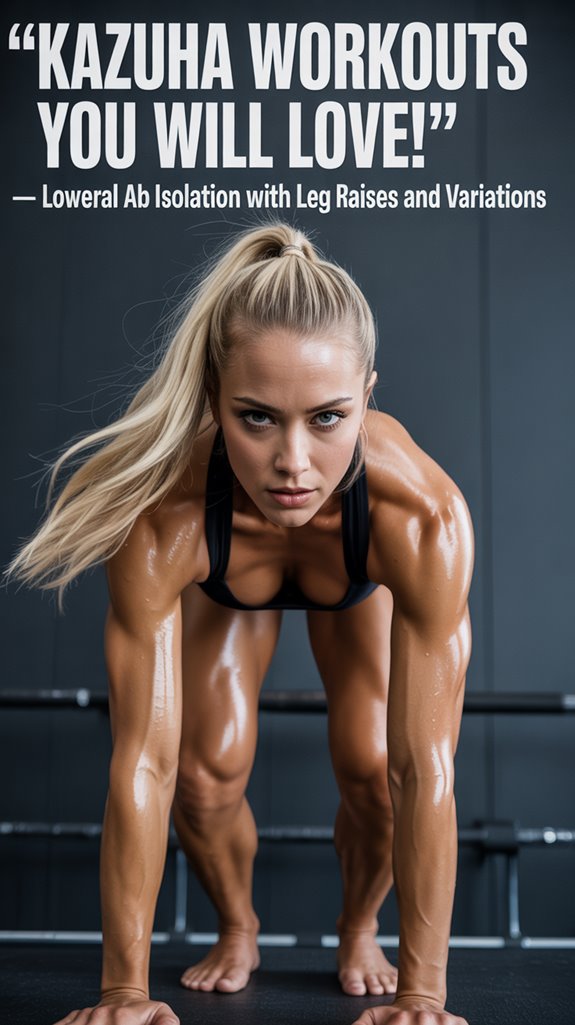
Though leg raises appear straightforward, mastering lower ab isolation requires understanding the essential distinction between hip flexor dominance and true abdominal engagement. You’ll achieve peak lower ab activation by executing a posterior pelvic tilt—curling your pelvis upward rather than simply lifting your legs. During hanging leg raises, maintain an overhand grip while deliberately flexing your spine and curling your pelvis toward your ribcage. For lying variations, position your hands beneath your glutes for lumbar support, then focus on the pelvic curl throughout each repetition.
Execute slow, controlled movements without momentum. Lock briefly at the bottom position to maximize muscle fiber recruitment. Progress from bent-knee raises to straight-leg variations, then incorporate ankle weights. Advanced practitioners should emphasize pelvic tilt techniques over leg height—this distinction transforms hip flexor exercises into genuine lower ab isolation movements that develop core strength and aesthetic definition. Weak hip flexors can lead to quad strain, making it beneficial to incorporate mobility exercises alongside your leg raise progressions. Consistency and pairing these workouts with a balanced diet will help you see better results over time.
Oblique Blasting Side Plank Series
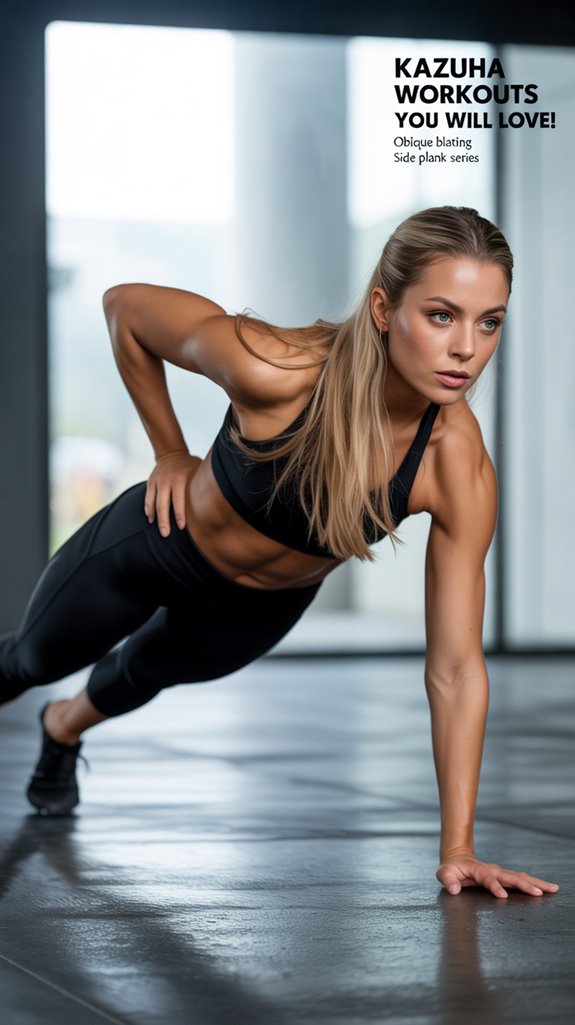
Side planks forge bulletproof obliques by challenging your lateral core through sustained isometric tension that standard planks can’t match. You’ll activate up to 40% more oblique muscle fibers when positioning your elbow directly under your shoulder and maintaining a rigid line from ankles through shoulders. Drive maximal oblique muscle activation by squeezing your glutes, bracing your core, and pulling your shoulder blades together while breathing steadily.
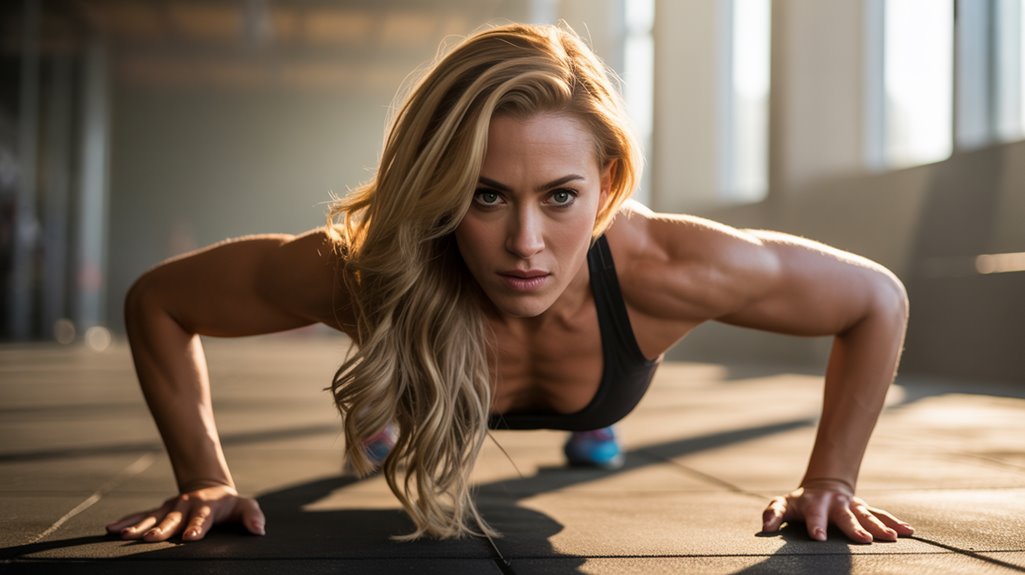
Master the foundation before tackling side plank variations like oblique crunches, reach-throughs, or leg lifts that intensify lateral flexion. Hold for 40 seconds per side to optimize engagement. Don’t let your hips sag or rush progressions—controlled execution builds the rotational power and trunk stability demanded by advanced athletic performance and everyday movement resilience. Position your elbow facing forward to protect your shoulder joint and create external rotation that enhances stability throughout the movement.
Dynamic Crunch Combinations for Total Core Activation
Dynamic crunch combinations multiply your core training results by targeting multiple muscle groups through movement patterns that demand coordination, stability, and power. You’ll engage your entire anterior chain through dynamic crunches while simultaneously challenging deep stabilizers like the transversus abdominis.
Execute these advanced variations to maximize core stability and functional strength:
- Alternating V-ups combine upper and lower body lifts, activating your whole core while enhancing flexibility through full-range contraction
- Dead bug crunches alternate arm and leg extension during the crunch, forcing lumbar stability and improving cross-pattern coordination
- Standing bicycle crunches enable trunk flexion and rotation upright, mimicking athletic movements and integrating dynamic balance
Perform 12–15 reps per exercise, exhaling forcefully during each contraction to optimize intra-abdominal pressure and maintain proper spinal alignment throughout execution. Hold each position for three deep breaths to build endurance and strengthen your core muscles effectively.
Russian Twists and Rotational Power Moves
When you rotate your torso against resistance, you’re activating the exact muscle-firing patterns that generate power in virtually every athletic movement—from throwing a punch to swinging a golf club. Russian twist variations build this rotational strength systematically. Start seated with your torso at 45°, feet elevated, and rotate through your core—not your arms. Add dumbbells, kettlebells, or medicine balls to amplify muscle fiber recruitment and metabolic demand.
The rotational power benefits extend beyond aesthetics. You’ll develop explosive force transfer through your obliques, rectus abdominis, and deep stabilizers—muscles that protect your spine during multiplanar movement. This core-driven stability also plays a crucial role in back pain prevention by reinforcing the muscles that stabilize your spine during dynamic movements. Execute 2–3 sets of 8–16 controlled repetitions, maintaining spinal alignment throughout. This functional strength translates directly to athletic performance and everyday activities requiring twisting motions.
Plank Variations That Challenge Your Stability
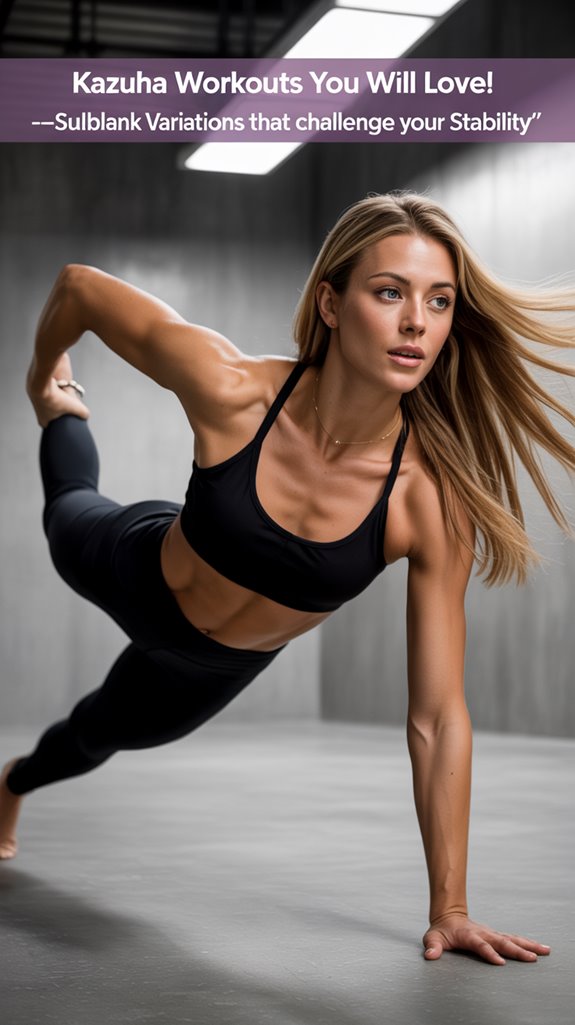
Holding your body in a static position against gravity might seem simple, but plank variations systematically dismantle that illusion by introducing instability that forces your core to work overtime. You’ll reveal profound plank benefits by challenging balance through contralateral limb lifts, shoulder taps, and side plank rotations—each demanding heightened core stability and neuromuscular control.
Advanced plank progressions include:
- Contralateral limb lifts that activate deeper stabilizers like multifidus and erector spinae while amplifying proprioceptive demand
- Dynamic variations such as kick throughs and plank-to-squat shifts that elevate heart rate and integrate full-body conditioning
- Lateral challenges like side planks with thread-the-needle rotations that address asymmetrical strength deficits and reduce injury risk
These movements require impeccable alignment—straight spine, engaged glutes, no lumbar sagging—to maximize effectiveness and protect your lower back. Beginners who cannot maintain proper form for 30 seconds should modify to knees until building sufficient core strength to progress to full planks.
Scissor Kicks and Reverse Crunches for Lower Belly Definition
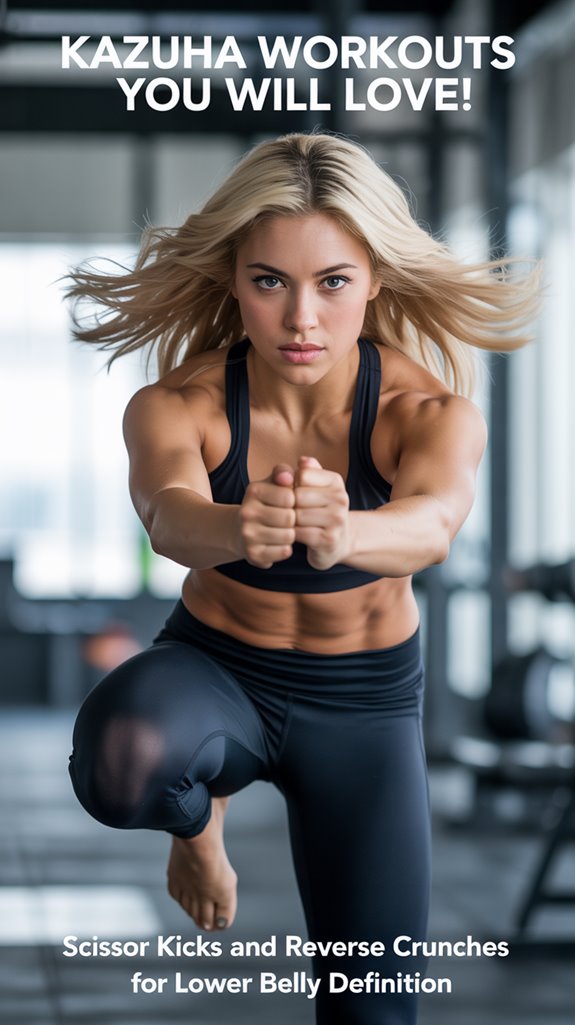
While planks build foundational stability through static holds, targeted movements like scissor kicks and reverse crunches attack the lower abdominal region with deliberate precision. Scissor kicks benefits extend beyond aesthetics—you’ll recruit your rectus abdominis, hip flexors, and inner thighs while maintaining continuous tension on your core. Execute them supine with legs elevated, alternating crosses while pressing your lower back into the floor to prevent strain.
Reverse crunches technique demands strict form: curl your hips toward your chest using pure abdominal contraction, eliminating momentum and hip flexor dominance. This isolation targets the lower rectus abdominis more effectively than traditional crunches. You’ll strengthen pelvic stability and spinal protection simultaneously.
Program these movements consistently—controlled breathing, deliberate tempo, and proper alignment transform them from basic exercises into precision tools for lower belly definition and functional core strength. Scissor kicks prove more challenging than flutter kicks due to the crisscross motion pattern, making them an advanced progression for core development.
Cross V-Ups and Diagonal Movement Patterns
Cross V-ups demand explosive coordination as you simultaneously lift your torso and legs from a supine position, reaching your hands toward the opposite foot in a diagonal pattern. This dynamic movement targets your rectus abdominis, obliques, and hip flexors while building functional core strength that translates directly to athletic performance.
Key execution principles:
- Maintain straight limbs throughout to maximize isometric tension and muscle recruitment across your entire core
- Control the eccentric phase as you lower back down, preventing momentum from compromising spinal alignment
- Alternate diagonal patterns by reaching right hand to left foot, then left hand to right foot, ensuring balanced oblique development
These cross-planar movements enhance neuromuscular control, improve rotational power, and reinforce anti-rotational stability—essential qualities for injury prevention and athletic dominance. The quadriceps play a crucial role in maintaining knee straightening and balance during the diagonal reach, stabilizing your lower body as you form the V position.
Building Consistency and Form for Lasting Results
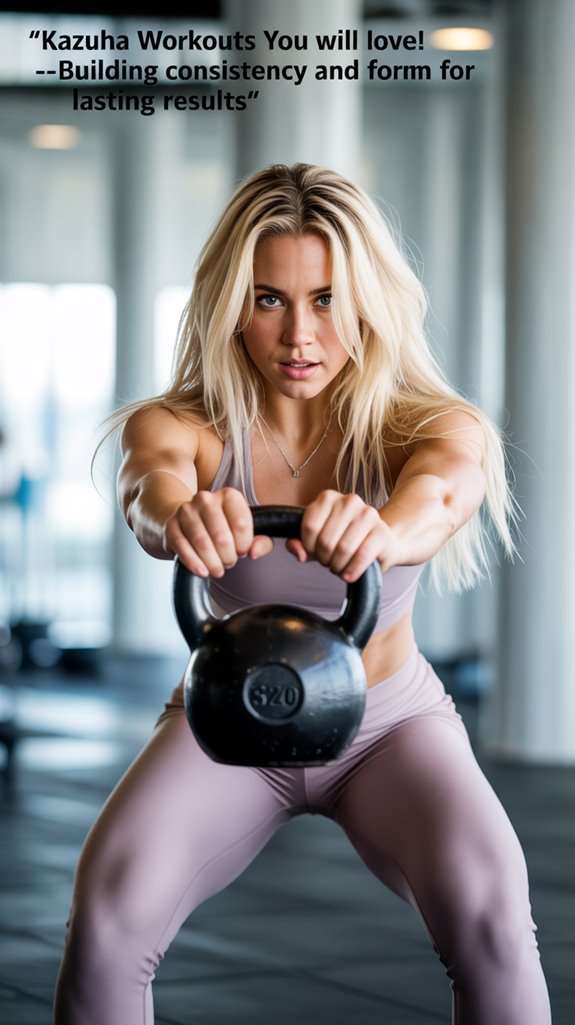
Beyond the mechanics of any individual exercise lies the critical framework that determines whether your training produces transformative results or fades into abandoned intentions: consistency paired with uncompromising form. Establishing specific workout days and times accelerates habit formation, transforming effort into automaticity. Track every session—measurable progress fuels motivation when intensity peaks. Prioritize precision: controlled tempo and proper alignment activate target muscles while serving as your primary injury prevention strategy. Neutral spine positioning during planks, deliberate breath control on exertion, and modifications when fatigue compromises technique aren’t optional—they’re essential. Schedule rest days deliberately; recovery isn’t weakness, it’s strategic muscle repair. Following each session, incorporate static stretches like cobra pose and child’s pose to release core tension and promote flexibility. Incremental progression—adding reps, resistance, or complexity every 2-4 weeks—ensures continuous adaptation. This disciplined approach separates temporary enthusiasm from lasting transformation, building the foundation where Kazuha-inspired athleticism becomes your sustainable reality.
Conclusion
You’ve got ten powerful workouts inspired by Kazuha’s dedication to fitness and artistry. Now it’s time to take action. Start with the exercises that excite you most, focus on proper form, and gradually build your routine. Remember, consistency beats perfection every time. Why wait another day to transform your core strength and confidence? Grab your mat, set your playlist, and let these workouts sculpt the strong, graceful body you’ve been dreaming of. You’ve got this!