
This post contains affiliate links. As an Amazon Associate I earn from qualifying purchases.
You’ll build serious core strength with Daisy Keech’s signature ab routine that targets every angle of your midsection. Start with basic crunches and bicycle kicks to engage your upper abs and obliques, then progress to jack knives for complete activation. Russian twists develop rotational power while toe taps and reverse crunches isolate your lower abs. Butterfly kicks boost endurance, bent toe taps deepen engagement, and leg raises finish strong. The thorough breakdown below reveals exactly how to execute each movement for maximum definition.
Key Takeaways
- Basic crunches and reverse crunches target upper abs with controlled movements, offering greater range of motion and muscle activation.
- Jack knives provide complete abdominal activation by engaging the entire core, including rectus abdominis, obliques, and stabilizing muscles simultaneously.
- Bicycle kicks and butterfly kicks build core endurance through sustained tension while targeting obliques and lower abs effectively.
- Russian twists develop rotational strength and functional core stability essential for explosive movements and spinal protection during twisting.
- Toe taps, bent toe taps, and leg raises isolate lower abs with precise control and progressive variations.
Basic Crunches for Upper Ab Definition
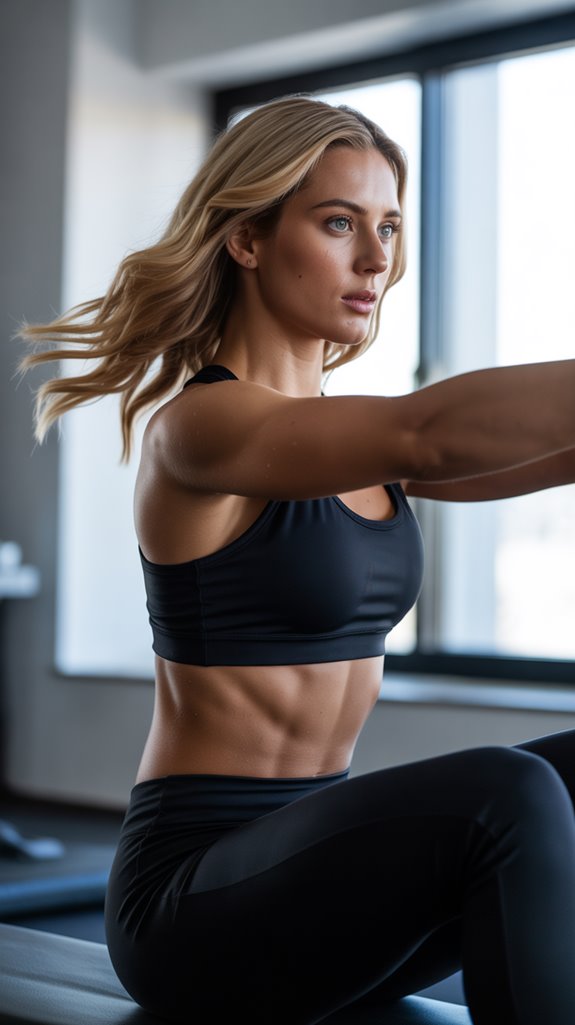
When you’re looking to sculpt defined upper abs, basic crunches remain one of the most effective exercises you can incorporate into your routine. Begin by lying flat with knees bent and feet planted firmly. Contract your rectus abdominis to lift your upper back off the floor while keeping your lower back pressed down. Proper form demands controlled movement—avoid using momentum or pulling on your neck. Instead, focus on bringing your ribcage toward your pelvis through pure abdominal contraction. As you advance, explore crunch variations like stability ball crunches and incline bench work, which research shows yield superior upper ab activation. While crunches emphasize upper ab activation, complete isolation of this region isn’t possible since the rectus abdominis functions as a single muscle unit. For best results, perform 10-15 reps initially, progressing to weighted versions as your strength increases. Many women find these moves enjoyable and easy to include in everyday routines.
Bicycle Kicks to Build Core Endurance
While crunches effectively target your upper abs, bicycle kicks deliver something different—comprehensive core endurance that transforms your midsection into a powerhouse of stamina and strength.
This dynamic movement engages your rectus abdominis, obliques, and transverse abdominis simultaneously while your legs hover 2–6 inches off the ground. You’ll alternate bringing each knee toward your chest as the opposite leg extends, creating continuous tension that builds core stability through sustained muscular effort. The exercise also activates your hip flexors and rectus femoris, providing comprehensive lower body engagement that supports overall stability. Consistent practice combined with proper nutrition is key to reducing love handles and revealing toned obliques, so pair these moves with targeted workouts and healthy eating.
Master bicycle kicks with these progressions:
- Level 1: Keep hands on the floor with minimal rotation for foundational strength
- Level 2: Place hands behind your head, touching elbow to opposite knee for maximum oblique activation
- Interval protocol: Execute 30-second bursts followed by 10-second rest periods for superior endurance training
- Isometric holds: Pause 4 seconds at peak contraction to intensify time under tension
Jack Knives for Complete Abdominal Activation
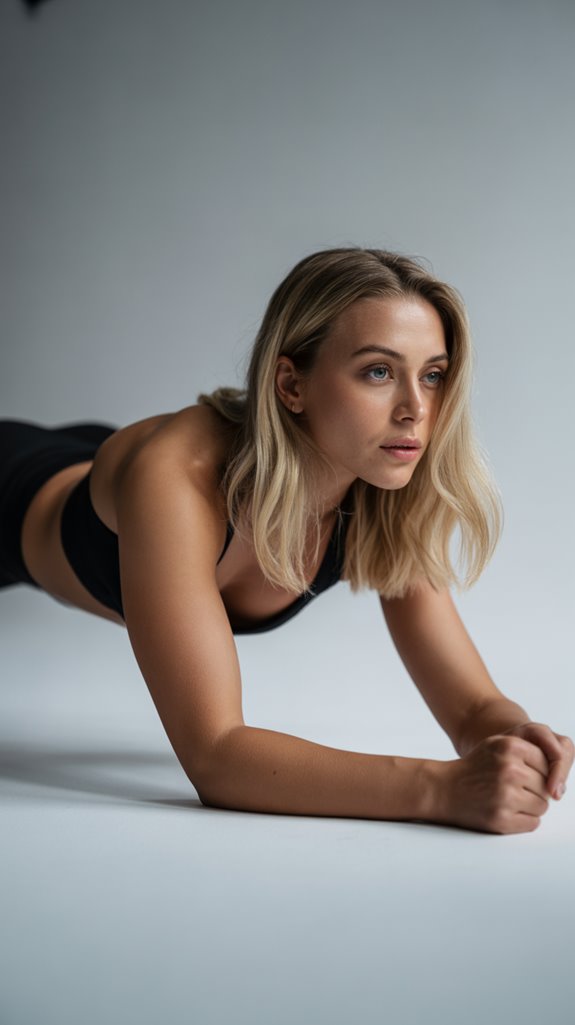
Jack knives catapult your ab training beyond isolated movements by demanding simultaneous engagement of your entire core in one explosive motion. You’ll activate your rectus abdominis, transverse abdominis, and obliques while recruiting stabilizers throughout your lower back, glutes, and shoulders. This thorough recruitment pattern develops core stability that translates directly to functional strength and improved posture. Including core exercises from varied workouts helps keep routines enjoyable and effective by targeting muscles in different ways core workouts.
Execute with precision: lie flat, maintain neutral spine, then simultaneously lift your arms and legs to meet at peak contraction. Control your descent slowly to maximize tension and minimize injury risk. Explore jack knife variations like V-ups for advanced challenge or stability ball progressions for enhanced instability training.
Avoid rushing reps or allowing excessive lumbar movement—these mistakes shift emphasis away from your abs and risk lower back strain. Start with five reps and gradually work up to ten as your core strength builds. Breathe rhythmically throughout each repetition.
Russian Twists for Rotational Strength

Russian twists forge rotational power that translates directly from your core workouts to athletic excellence on the field, court, or gym floor. You’ll develop the obliques and deep stabilizers essential for explosive twisting movements in sports like tennis, golf, and martial arts. This exercise doesn’t just sculpt your midsection—it builds functional strength that protects your spine during loaded rotation.
Progressive Implementation for Mastery:
- Start bodyweight to perfect mechanics and spinal alignment before adding resistance
- Add kettlebells or cables to increase metabolic demand and strengthen rotational power
- Vary pulley angles to target upper and lower oblique fibers with precision
- Integrate into circuits for enhanced core stability and cardiovascular conditioning
You’ll transfer this strength directly into compound lifts and dynamic activities requiring controlled torso rotation. The movement enhances isometric core strength at your pelvis while allowing dynamic spine rotation, creating the stability foundation needed for heavy squats and deadlifts.
Toe Taps to Target Your Lower Abs
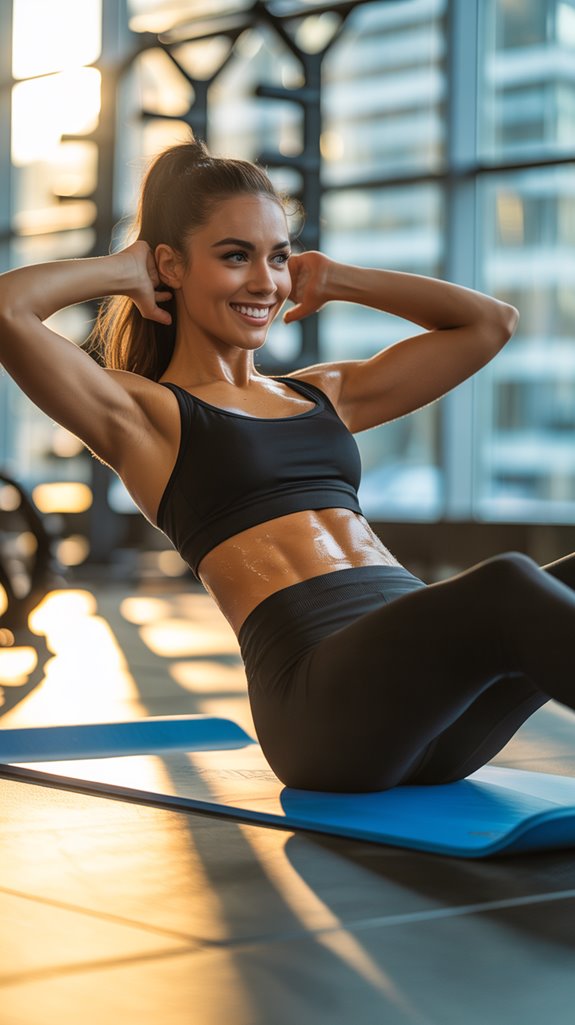
Toe taps shift your focus downward to attack the lower abdominals with surgical precision. This movement isolates your rectus and transverse abdominis while recruiting obliques and hip flexors for stabilization. The toe tap benefits extend beyond aesthetics—you’ll build core endurance, enhance postural stability, and reduce lower back pain risk.
Proper toe tap technique begins in tabletop position: legs lifted, knees bent, thighs perpendicular. Press your lower back gently into the mat, then slowly lower one foot to tap the floor while keeping the opposite leg steady. Alternate with control—no momentum, no swinging. Your core should remain engaged throughout every repetition. Aim for 10 taps on each side, progressing to 2 sets as your strength improves.
To progress, tap both feet simultaneously or add resistance. Beginners can keep one foot grounded initially. Breathe steadily, avoid arching your back, and never sacrifice form for speed.
Scissor Kicks for Hip Flexor Engagement
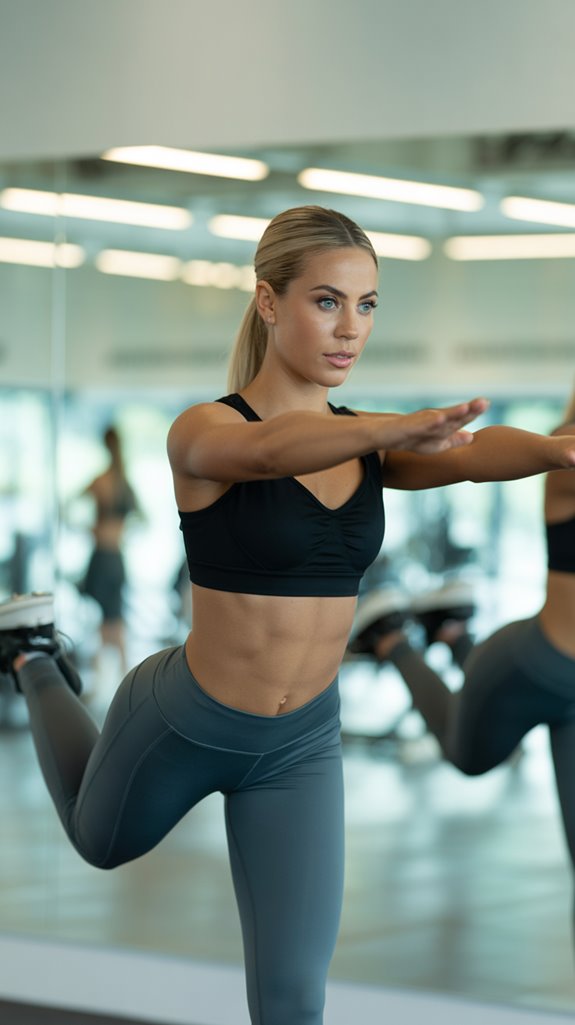
- Press your lower back flat into the floor throughout the entire movement to protect your spine
- Keep legs straight and hover them just inches above ground for maximum tension
- Cross legs in controlled “V” patterns rather than jerking them wildly
- Maintain steady breathing to fuel your hip flexors through each alternating rep
You’ll notice improved performance in squats, deadlifts, and explosive movements as your hip flexor strength increases. The exercise specifically targets the adductors and abductors with its crisscross motion, making it more advanced than similar core movements.
Reverse Crunches to Isolate the Lower Abdomen
The reverse crunch stands out as one of the most effective movements for targeting your lower abs without overworking your hip flexors. This exercise emphasizes controlled hip lifting while your head and shoulders remain grounded, creating focused contraction in the lower rectus abdominis. Reverse crunch benefits extend beyond aesthetics—you’ll strengthen deep stabilizers like the transverse abdominis while reducing lumbar disc pressure compared to standard crunches. Reverse crunches create more tension on abdominal muscles than regular crunches while offering a greater range of motion for enhanced muscle activation.
Lower ab isolation improves dramatically when you eliminate momentum and perform slow, deliberate repetitions. Your core stability increases as supporting muscles maintain spinal alignment throughout each rep. Progress strategically by mastering bodyweight execution before advancing to decline variations or resistance bands. Combined with proper nutrition for fat loss, this movement builds the foundational strength and muscle definition required for complete abdominal development and enhanced functional performance.
Butterfly Kicks for Enhanced Ab Stamina
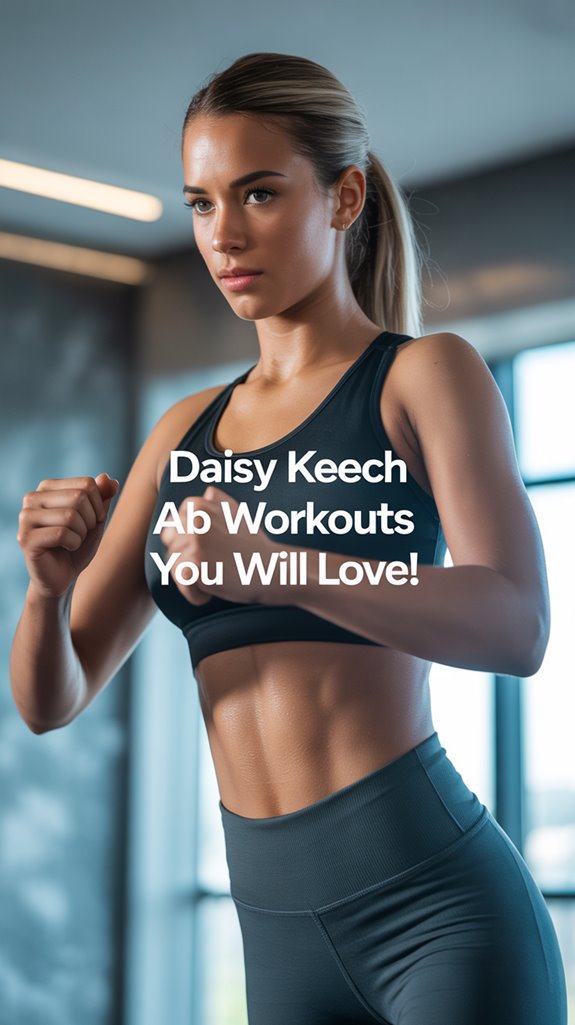
When you’re ready to push your core endurance to the next level, butterfly kicks deliver a dynamic lower ab burn that builds stamina through controlled, sustained muscle tension.
Execution Protocol:
- Foundation setup — Press your lower back firmly into the mat while positioning hands under your glutes for enhanced core stability and pelvic support.
- Movement pattern — Elevate legs 30°-45° and execute vertical flutter kicks with deliberate control, engaging your rectus abdominis and transverse abdominis throughout.
- Volume prescription — Target 30-40 seconds per set or 30+ reps per leg to build meaningful endurance capacity.
- Breathing mechanics — Coordinate inhales and exhales with each repetition to maintain rhythm and reinforce lower back health.
This technique strengthens hip flexors, obliques, and supporting posterior chain muscles while developing the stamina necessary for advanced core work. Beyond core development, this exercise contributes to weight loss by burning calories during the sustained muscle engagement of each set.
Bent Toe Taps for Deeper Lower Ab Work
Building on that endurance foundation, bent toe taps shift your focus to controlled lower ab isolation through precise leg lowering mechanics. You’ll lie supine with knees bent at 90 degrees, maintaining tabletop position while lowering your toes toward the mat. The key is preserving your spinal imprint—your lower back stays pressed down throughout, preventing arch and protecting your lumbar region.
This movement demands exceptional core stability as your transverse and rectus abdominis work against gravity’s pull. Enhanced muscle engagement occurs when you maintain constant tension, never allowing momentum to take over. Place your hands on your lower abs to monitor proper activation. This tactile feedback helps you sense when your deeper abdominal layers are properly recruited during each repetition.
Start with 10-15 controlled reps, progressing to simultaneous toe taps or ankle weights as your strength develops. If you can’t maintain form, reduce your range rather than compromising technique.
Leg Raises to Finish Strong
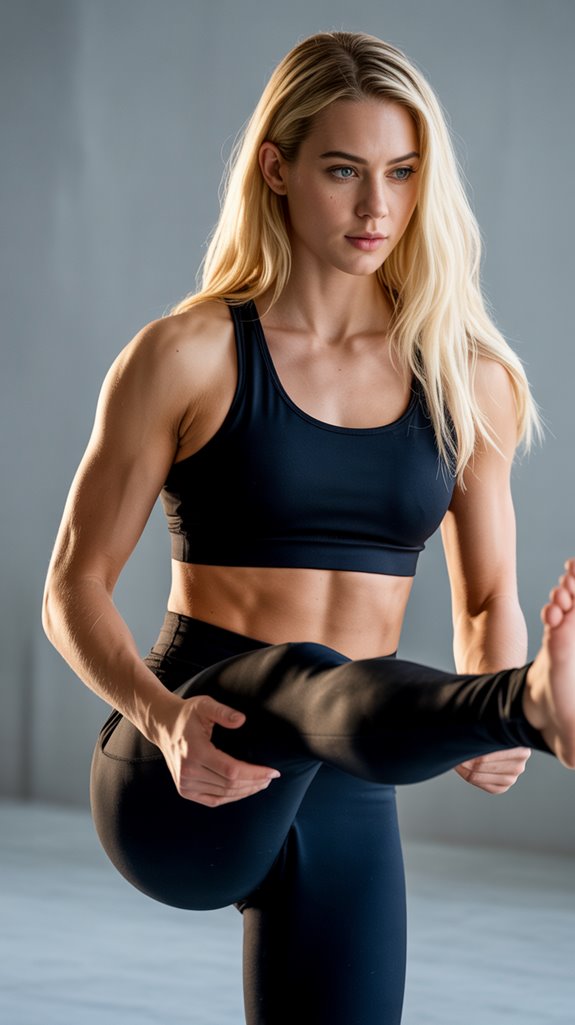
As your ab circuit reaches its peak, leg raises deliver the ultimate lower core challenge that tests everything you’ve built throughout your workout. You’ll target your rectus abdominis and hip flexors while demanding strict spinal control—no momentum allowed.
Execute flawless leg raises with these precision cues:
- Press your lower back flat into the mat throughout the entire movement to protect your spine and maximize core engagement
- Lower your legs to six inches from the floor with controlled tempo, never sacrificing neutral spine for depth
- Exhale during the lift phase and inhale while lowering to maintain intra-abdominal pressure
- Progress through leg raise variations systematically—bent-knee modifications for beginners, straight-leg for intermediate, weighted or hanging versions for advanced athletes
Track your tempo improvements weekly to measure genuine strength gains. Research demonstrates that leg raises activate the rectus abdominis and rectus femoris more effectively than traditional sit-ups, making them a superior choice for maximizing lower ab development.
Conclusion
You’ve probably heard that spot reduction is impossible, and here’s the truth: you can’t burn belly fat from ab exercises alone. However, Daisy Keech’s workouts aren’t just about aesthetics—they’ll genuinely strengthen your core, improve your posture, and boost your overall athletic performance. When you combine these exercises with proper nutrition and cardio, you’ll see real results. So don’t skip these moves thinking they’re pointless; they’re building the foundation you need for a strong, functional midsection.