
You’ll transform your upper body with these proven movements: Push-Press builds explosive power through leg drive, while Barbell Rows engage your entire posterior chain. Arnold Press delivers multi-angle deltoid activation, and Face Pulls correct muscular imbalances by targeting rear delts and rotator cuffs. Add Half-Kneeling Archer Rows for stability, Seated Dumbbell Press for controlled growth, and Reverse Pec-Deck for scapular strength. Dumbbell Thrusters combine squats with overhead pressing for functional power. Each exercise emphasizes scapular retraction and core stability to maximize results while protecting your joints from injury—and there’s much more to discover about optimizing your training.
Key Takeaways
- Push-press builds explosive shoulder power using leg drive, while barbell rows engage the entire posterior chain for complete back development.
- Arnold press targets all three deltoid heads through rotation, and half-kneeling archer rows improve back strength with enhanced core stability.
- Dumbbell lateral raises create shoulder width by isolating middle delts; reverse pec-deck strengthens rear delts with a fixed movement path.
- Face pulls address shoulder imbalances and improve posture by targeting rear deltoids, rhomboids, and rotator cuff muscles with external rotation.
- Dumbbell thrusters combine front squats and overhead presses for full-body conditioning, building both functional strength and cardiovascular endurance.
Push-Press for Power and Mass Building

When you’re looking to break through strength plateaus and build explosive power, the push-press stands out as one of the most effective movements you can add to your training arsenal. This compound lift leverages dynamic leg drive to accelerate heavier loads overhead, targeting your deltoids, triceps, and lower body simultaneously. You’ll develop fast-twitch muscle fibers essential for explosive training while improving power output across athletic movements. The exercise delivers exceptional athletic carryover to Olympic lifts and sports requiring rapid force transfer. By incorporating leg assistance, you’ll enhance shoulder stability and overhead mechanics with superior joint safety compared to strict pressing variations. The movement demands significant core stability throughout the lift, conditioning your entire kinetic chain. Proper ribcage expansion is essential for maintaining bar position and creating space for optimal shoulder mechanics during the overhead press. You’ll build mass, strength, and functional power efficiently. Incorporating both chest and back exercises in your program helps ensure balanced upper body development and reduces injury risk.
Barbell Row for Complete Back Development
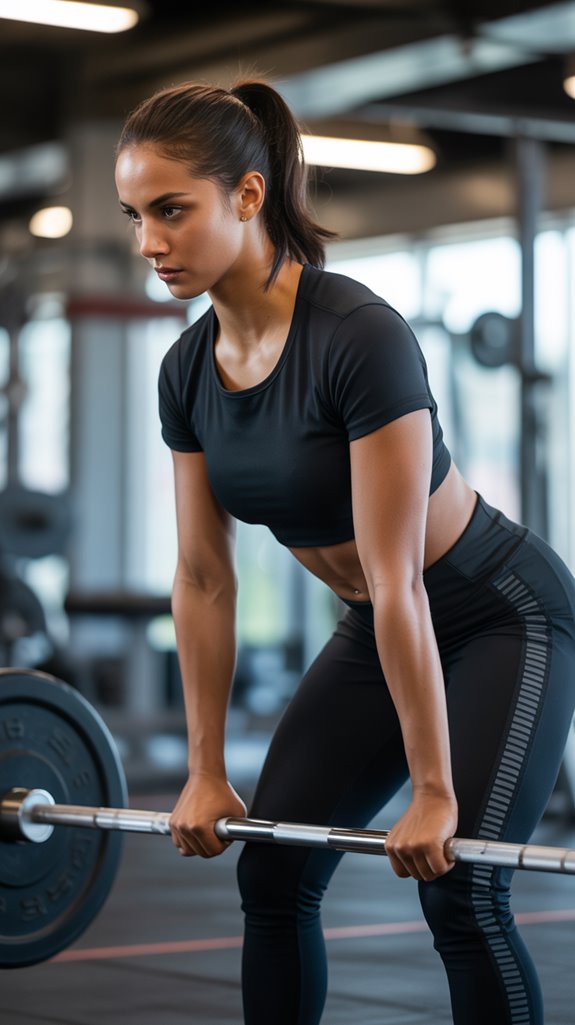
The barbell row delivers unmatched back development by engaging your entire posterior chain through a single compound movement. Position your feet mid-foot under the bar, grip with palms down at medium width, and maintain a near-horizontal torso throughout execution. Pull the bar to your lower chest with elbows leading, keeping your hips higher than deadlift position while your knees stay unfastened and back. Incorporate these rows into your training split to ensure consistent back strength improvements over time. Master barbell grip variations to target specific regions—wider grips build rhomboid thickness, while narrower positions emphasize lat development. Reset the bar on the floor between reps to preserve spinal neutrality and breathing rhythm. Wrap your thumbs around the bar for a full grip that provides better control and prevents the bar from slipping during heavy pulls. Effective back engagement techniques require retracting your scapulae at the top, visualizing pinching a coin between your shoulder blades. Avoid excessive torso rise, which indicates you’re lifting too heavy and compromising upper-back activation.
Arnold Press for Multi-Angle Shoulder Growth
Building massive lats and traps sets the foundation, but complete upper-body development demands equal attention to shoulder strength and size. The Arnold Press delivers thorough deltoid activation across all three heads through its distinctive rotation pattern. You’ll engage anterior, medial, and posterior fibers while dramatically increasing your range of motion beyond standard presses.
Execution Protocol:
- Start position: Hold dumbbells at shoulder height, palms facing torso, elbows tight
- Press and rotate: Corkscrew weights overhead while simultaneously rotating palms forward
- Lockout mechanics: Achieve full extension with proper scapular retraction for shoulder stability
- Controlled descent: Reverse the rotation pattern, maintaining tension throughout
Master the timing of wrist rotation before loading heavy. You’ll maximize muscle growth while recruiting stabilizers that standard pressing movements miss entirely. The movement also engages your triceps during the overhead pushing motion, contributing to complete upper-body strength development. To ensure balanced progress and injury prevention, include progressive overload and proper recovery strategies in your programming.
Face Pulls for Rear Delt and Posture Enhancement
While pressing movements dominate most training programs, they create dangerous imbalances that compromise shoulder health and posture. Face pulls directly address this weakness by targeting your rear deltoids, rhomboids, and rotator cuff muscles—the exact stabilizers neglected in push-heavy routines.
Set your cable at head height and pull the rope toward your upper face while keeping elbows high. Squeeze your shoulder blades at peak contraction. This movement pattern strengthens scapular retractors essential for posture alignment and injury prevention. Rotate shoulders externally during the pull to maximize engagement of the infraspinatus and posterior deltoid fibers.
Program 3–4 sets of 12–15 reps after your primary lifts. The face pull benefits extend beyond aesthetics—you’ll build resilient shoulders capable of handling heavy pressing while reversing the forward-shoulder position caused by sedentary lifestyles. Master this movement to guarantee longevity in your training.
Incline Dumbbell Row for Upper Back Thickness

Strong rear delts need a foundation of upper back mass to create a complete posterior chain. The incline dumbbell row targets this critical region, making it one of the most effective upper back exercises for muscle hypertrophy. Set your bench at 45 degrees and maintain chest contact throughout the movement to eliminate momentum and isolate your rhomboids, traps, and lats.
Execute with precision:
- Pull elbows toward your hips in a controlled arc, squeezing shoulder blades together at peak contraction
- Choose neutral grip positioning to optimize joint mechanics and muscle recruitment
- Program 3 sets of 8–10 reps weekly as your secondary movement
- Load progressively while maintaining strict form—chest support enables heavier weights without lower back strain
Before initiating your first rep, establish a sturdy, rigid frame by squeezing your glutes and flexing your upper and mid-back muscles to prevent your shoulders from slumping. You’ll build the thickness that transforms your posterior development.
Dumbbell Lateral Raise for Broader Shoulders

If you want shoulders that command attention from every angle, lateral raises deliver the targeted stimulus your middle delts need to grow. Understanding shoulder anatomy reveals why: the lateral deltoid head creates width, transforming your upper body silhouette from narrow to commanding.
Smart dumbbell selection matters more than ego. Choose weights that allow 10–20 controlled reps without momentum or trap involvement. Stand with feet hip-width apart, maintain a neutral grip, and lead with your elbows—not your hands. Raise to shoulder height, pause one second, then lower for three seconds.
Keep your core braced and shoulders retracted throughout. Maintain a slight bend in your elbows to protect the joint and maximize deltoid engagement. Program 2–3 sets after compound presses when your form won’t deteriorate from fatigue. Execute each rep with precision, and you’ll build the broad, rounded shoulders that separate intermediate lifters from advanced athletes.
Half-Kneeling Archer Row for Stability and Strength
Most lifters overlook single-arm movements that challenge stability as intensely as strength, yet the half-kneeling archer row addresses both simultaneously. Position yourself with one knee down, opposite foot planted, maintaining 90-degree angles at both knees. Hold a resistance band with thumbs pointing skyward—this guarantees proper shoulder external rotation throughout the movement.
Key execution elements:
- Core engagement remains constant through abdominal bracing and controlled ribcage positioning while pulling
- Pull one arm back archer-style while keeping the opposite arm completely straight
- Focus on scapular retraction and squeezing shoulder blades together at movement completion
- Active glute contraction on your kneeling leg maintains pelvic stability against rotational forces
This movement delivers exceptional shoulder mobility gains while simultaneously strengthening rotator cuffs, rhomboids, and rear deltoids. The exercise works effectively as a warmup for back and shoulder training sessions, preparing these muscle groups before heavier lifts. Perform three sets of 12-15 repetitions per side.
Seated Dumbbell Press for Controlled Hypertrophy
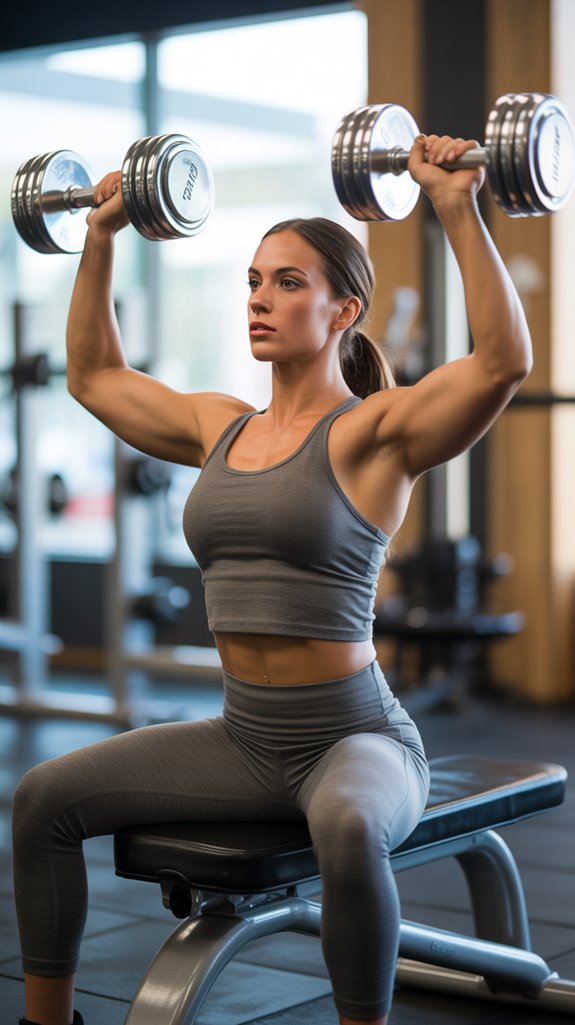
While single-arm stability work builds foundational shoulder strength, bilateral pressing movements create the mechanical overload necessary for significant deltoid hypertrophy. You’ll position yourself seated with feet planted shoulder-width apart, dumbbells at shoulder level with palms forward. Brace your core and press overhead until your elbows fully extend, keeping them positioned in front rather than flared outward. Your biceps should track toward your ears during ascent. Control the descent deliberately back to shoulder height at ninety degrees. This targets your front deltoids primarily while engaging lateral heads more extensively than barbell exercise variations due to increased range of motion. Your triceps contribute throughout. Avoid excessive arching or momentum-based bouncing that compromises muscle stimulus and delays muscle recovery. Maintain scapular retraction throughout each repetition for ideal positioning. Program this exercise with higher rep sets of six to fifteen repetitions, typically performing two to five sets at the end of your workout after completing your primary barbell movements.
Reverse Pec-Deck for Posterior Chain Activation

This machine’s horizontal abduction pattern provides unique stimulus you won’t replicate elsewhere:
- Fixed movement path eliminates compensation patterns, ensuring your target muscles perform the work
- Controlled tempo maximizes time under tension for superior hypertrophy adaptation
- Safe failure training without spotter dependency accelerates strength progression
- Addresses desk-induced postural dysfunction by strengthening scapular retractors
The reverse pec deck delivers superior deltoid activation compared to traditional exercises like seated rows and lat pulldowns, making it exceptionally efficient for rear delt development.
Program this movement 2–3 times weekly to balance your shoulder girdle and bulletproof your joints against impingement.
Dumbbell Thruster for Total Body Integration
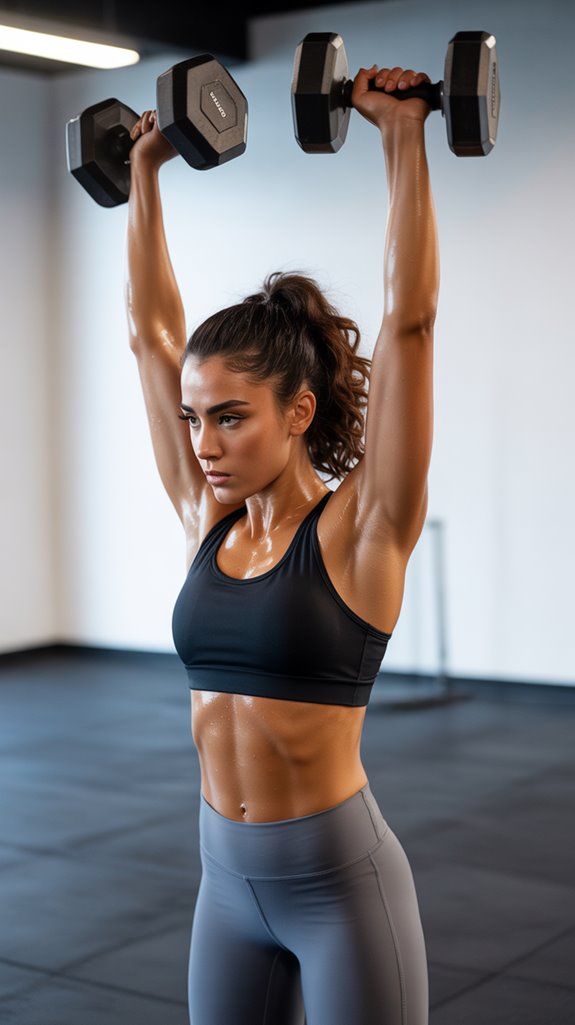
Few exercises deliver the metabolic chaos and full-body recruitment of the dumbbell thruster. You’ll combine a front squat with an overhead press, igniting your legs, glutes, core, shoulders, and triceps simultaneously. The dumbbell thruster benefits extend beyond mere muscle activation—you’re building explosive power through the aggressive hip drive that propels the weights overhead, developing an athletic attribute most lifters neglect.
This total body workout elevates your heart rate dramatically, merging cardiovascular conditioning with strength development. You’ll enhance coordination as you shift seamlessly from squat depth to overhead lockout, while improving ankle, hip, and shoulder mobility. The movement mirrors real-world demands like hoisting luggage overhead or lifting heavy objects onto shelves, making your strength genuinely functional. Maintain elbows high and parallel to the ground throughout the movement to reduce shoulder stress and support proper torso alignment. Execute high-rep protocols for metabolic devastation.
Conclusion
You’ve conquered the list—congrats, you’re practically a fitness influencer now. All that’s left is filming yourself grunting through half-reps and posting motivational quotes over sunset photos. But seriously, these nine exercises (yes, nine—apparently counting isn’t our strong suit either) will actually build that back and shoulders you’ve been promising yourself since New Year’s. Now stop reading and start lifting. Your Netflix subscription won’t cancel itself, but your gym membership might.