This post contains affiliate links. As an Amazon Associate I earn from qualifying purchases.
If you’re looking for a vegan protein that fits your goals in 2026, you’ve got more strong options than ever. From clean pea isolates to blended powders with better flavor and amino acid balance, each product brings something different to the table. You’ll want to weigh taste, digestibility, and ingredients before you choose, because the best pick isn’t always the most obvious one.




More Details on Our Top Picks
NAKED Pea Protein Isolate Vegan NSF Certified
If you want clean protein without extras, NAKED Pea Protein Isolate fits the bill. You get 27 grams of protein per serving from 100% yellow peas, plus 5.7 grams of BCAAs to support recovery. It’s vegan, vegetarian, NSF Certified, non-GMO, soy-free, gluten-free, and lactose-free, so it works for many diets. You won’t find artificial sweeteners, flavors, colors, or additives here. With just 120 calories, 2 grams of sugar, and 2 grams of carbs, it slides easily into shakes, smoothies, or recipes after training or anytime you want a simple high-protein boost.
- Protein Content:27g
- Serving Count:15 servings
- Flavor:Unflavored
- Sugar:2g
- Fiber:Unspecified
- Certifications:NSF Certified
- Additional Feature:Single-ingredient formula
- Additional Feature:NSF Certified
- Additional Feature:USA and Canada sourced
NAKED Rice Organic Brown Rice Protein Powder
NAKED Rice Organic Brown Rice Protein Powder suits you if you want a clean, single-ingredient vegan protein. You get 100% organic sprouted brown rice protein with no artificial sweeteners, flavors, colors, GMOs, soy, or gluten. Each serving delivers 10g of protein, 4g of carbs, 120 calories, and 0g sugar, so you can fit it into many diets. It’s independently tested for metals, melamine free, and made with a hexane-free extraction method. You also benefit from a superior amino acid profile that’s similar to whey protein, giving you a strong plant-based option.
- Protein Content:10g
- Serving Count:15 servings
- Flavor:Unflavored
- Sugar:0g
- Fiber:Unspecified
- Certifications:Organic
- Additional Feature:Sprouted brown rice protein
- Additional Feature:Metal-tested quality
- Additional Feature:Hexane-free extraction
Orgain Organic Vegan Protein Powder Creamy Chocolate Fudge
Orgain Organic Vegan Protein Powder, Creamy Chocolate Fudge suits chocolate lovers who want a smooth, satisfying plant-based shake. You get 21g of protein, 6g of prebiotic fiber, and low net carbs, with no added sugar or lactose ingredients. It blends organic peas, brown rice, and chia seeds, giving you all 9 essential amino acids. USDA Organic and third-party verified, it’s vegan, gluten-free, kosher, and non-GMO. You can mix it with water or milk alternatives, or stir it into oats and baked goods. It fits workouts, meal replacements, and family routines.
- Protein Content:21g
- Serving Count:Unspecified
- Flavor:Creamy Chocolate Fudge
- Sugar:No added sugar
- Fiber:6g prebiotic fiber
- Certifications:USDA Organic
- Additional Feature:6g prebiotic fiber
- Additional Feature:Includes chia seeds
- Additional Feature:Kid-friendly formula
Isopure Plant-Based Protein Powder (Vanilla 20 Servings)
Isopure Plant-Based Protein Powder suits you best when you want low-carb vegan protein without extra fuss. You get 20g of organic pea and brown rice protein per serving, plus a complete amino acid profile that supports muscle building, recovery, and daily performance. It fits clean nutrition goals because it skips added sugars, fillers, soy, dairy, and artificial additives. You can also use it if you follow keto, gluten-free, vegan, or flexitarian eating. Mix the vanilla powder into shakes, smoothies, or recipes for simple, versatile protein. Its non-GMO, certified organic ingredients keep things straightforward and dependable.
- Protein Content:20g
- Serving Count:20 servings
- Flavor:Vanilla
- Sugar:No added sugar
- Fiber:Unspecified
- Certifications:Non-GMO
- Additional Feature:Complete amino acid profile
- Additional Feature:Keto-friendly nutrition
- Additional Feature:Available in chocolate
BetterBody Foods Organic Plant Protein Powder 12.7 Ounces
BetterBody Foods Organic Plant Protein Powder gives you strong value if you want clean, everyday vegan protein. You get 16 grams per serving from pea protein, quinoa powder, and natural flavor, with no fillers or artificial ingredients. The neutral taste blends easily into shakes, baked goods, breakfast bowls, and even salads, so you can use it any time. It’s USDA-certified organic, vegan, gluten-free, non-GMO, lactose-free, and soy-free, which makes it easy to fit into your routine. With about 17 servings in a 12.7-ounce bag, you can keep protein handy at home, work, or the gym.
- Protein Content:16g
- Serving Count:About 17 servings
- Flavor:Neutral
- Sugar:Unspecified
- Fiber:Unspecified
- Certifications:USDA Organic
- Additional Feature:Quinoa powder blend
- Additional Feature:Neutral aftertaste
- Additional Feature:3-scoop serving
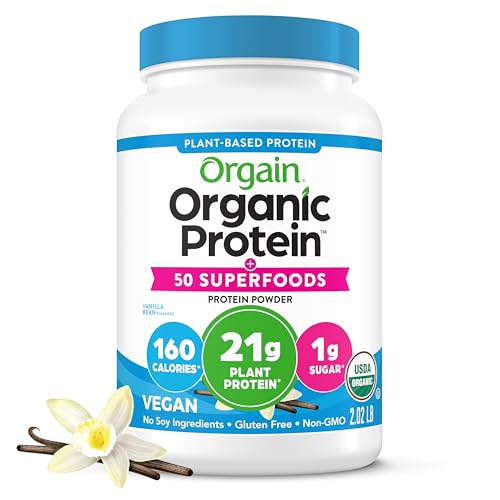
Orgain Organic Vegan Protein Powder Vanilla Bean
With 21g of plant protein and 50 superfoods, this powder suits clean-label smoothie fans. You get a blend of organic pea, brown rice, and chia seeds, which delivers all nine essential amino acids. Each serving adds 8g of prebiotic fiber, just 1g of sugar, and 160 calories. You’ll also get vitamin B6, vitamin C, and iron for immune support. USDA Organic, vegan, gluten-free, kosher, and Non-GMO, it skips soy, dairy, carrageenan, and artificial additives. Mix it with water or plant milk, or bake it into oats, cookies, and brownies for an easy protein lift.
- Protein Content:21g
- Serving Count:Unspecified
- Flavor:Vanilla Bean
- Sugar:1g
- Fiber:8g prebiotic fiber
- Certifications:USDA Organic
- Additional Feature:50 superfoods blend
- Additional Feature:8g prebiotic fiber
- Additional Feature:Excellent B6 and C
Ritual Vegan Protein Powder Vanilla (1 lb)
Ritual Vegan Protein Powder Vanilla is a premium pick for clean-label athletes and daily plant-based lifters. You get 20g of pea protein per serving, plus a complete amino acid profile with 4g of BCAAs to support lean muscle and recovery. Its vanilla taste brings caramel and spice notes, and you won’t find sugar, net carbs, or common fillers here. You’re also choosing a vegan, gluten-free, dairy-free, soy-free formula made with nine non-GMO ingredients. Ritual tests for over 200 contaminants and uses regeneratively farmed U.S. peas. The scoop-free package cuts carbon footprint by 22%.
- Protein Content:20g
- Serving Count:Unspecified
- Flavor:Vanilla
- Sugar:0g
- Fiber:Unspecified
- Certifications:Clean Label Project Purity Award
- Additional Feature:4g BCAAs
- Additional Feature:Regeneratively farmed peas
- Additional Feature:Scoop-free packaging
Optimum Nutrition Plant Based Protein Powder Creamy Vanilla
Optimum Nutrition’s Creamy Vanilla blend suits athletes who want clean plant protein. You get 24 grams per serving from pea, brown rice, and fava bean proteins, plus 9 essential amino acids and BCAAs to support muscle strength and recovery. This vegan, gluten-free formula has 0g sugar and skips artificial flavors, sweeteners, and colors. With 20 servings, it fits your routine easily. You can trust its banned-substance testing and quality control, while the Creamy Vanilla taste keeps shakes simple and enjoyable after training or between meals.
- Protein Content:24g
- Serving Count:20 servings
- Flavor:Creamy Vanilla
- Sugar:0g
- Fiber:Unspecified
- Certifications:Banned substance tested
- Additional Feature:Fava bean protein
- Additional Feature:Banned substance tested
- Additional Feature:9 essential amino acids
Garden of Life Organic Vegan Protein Powder
Garden of Life Organic Vegan Protein Powder suits you if you want easy digestion and clean, plant-based fuel. You get 22g of plant protein, 4g BCAAs, and just 120 calories per serving, plus 1g fiber and 1g net carbs. It’s sugar-free, non-GMO, gluten-free, and lactose-free, so it fits many diets. Organic peas, sprouted grains, seeds, and legumes supply whole-food nutrition, while enzymes and live probiotics support digestion. You can mix one scoop with water or plant milk, or blend it into smoothies. USDA Organic and NSF certifications add extra confidence.
- Protein Content:22g
- Serving Count:Unspecified
- Flavor:Unspecified
- Sugar:Sugar-free
- Fiber:1g fiber
- Certifications:NSF Certified Gluten Free
- Additional Feature:Live probiotics included
- Additional Feature:Digestive enzymes blend
- Additional Feature:Low-temperature processing
Vega Protein Made Simple Vanilla Protein Powder
Vega Protein Made Simple Vanilla is ideal if you want a clean, no-fuss protein shake. You get 15 grams of plant-based protein in just 100 calories, with only 4-8 simple ingredients. It’s vegan certified, gluten-free, dairy-free, lactose-free, and Non-GMO, so it fits many diets easily. You won’t find artificial sweeteners, added gums, or stevia here; instead, it’s lightly sweetened with organic cane sugar. Mix two scoops with ice-cold water or blend it into smoothies. Plus, its B Corp and Non-GMO Project verified certifications give you extra confidence in quality and ethics.
- Protein Content:15g
- Serving Count:Unspecified
- Flavor:Vanilla
- Sugar:Unspecified
- Fiber:Unspecified
- Certifications:B Corp Certified
- Additional Feature:4-8 simple ingredients
- Additional Feature:Organic cane sugar
- Additional Feature:B Corp Certified
Factors to Consider When Choosing Top-Rated Vegan Proteins (Pea vs. Soy vs. Rice)
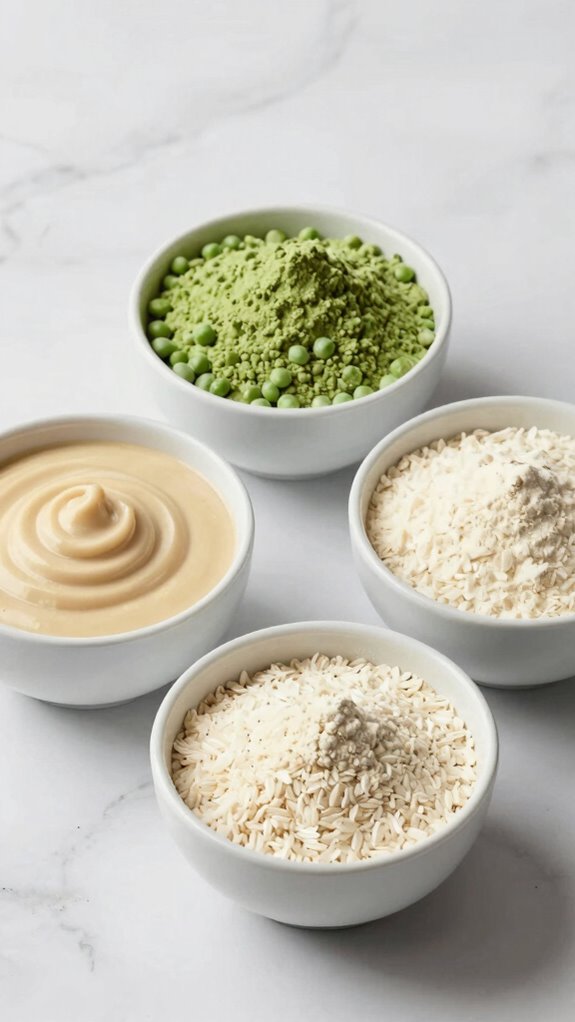
When you compare pea, soy, and rice proteins, you’ll want to look at protein quality and the amino acid profile first. You should also consider how easy each one is to digest and whether it fits your allergen needs. Finally, check the ingredient list so you can choose a clean option without unnecessary additives.
Protein Quality
Protein quality is one of the biggest factors to compare when choosing top-rated vegan proteins, and you’ll usually see it come down to amino acid balance, digestibility, and how well a protein supports recovery. Pea protein gives you a strong serving of protein, often around 27 grams, plus BCAAs that help fuel muscle repair. Rice protein is lighter at about 10 grams per serving, but it’s easy to digest and a smart pick if you’re sensitive to common allergens. Processing also matters, because better extraction can improve bioavailability and remove unwanted compounds. If you want a more complete nutritional picture, combining pea and rice can make your shake more comparable to animal-based options without changing your vegan routine.
Amino Acid Profile
Beyond protein quantity and digestibility, the amino acid profile helps you decide which vegan protein fits your goals best. If you want strong support for training, pea protein gives you plenty of branched-chain amino acids, which can help fuel recovery and growth. Soy protein stands out because it’s a complete protein, so you get all nine essential amino acids in one source. It also offers a more balanced spread, including more methionine than pea or rice, which can support muscle maintenance. Rice protein works well when you pair it with pea protein, since each fills gaps the other leaves. By combining plant proteins, you can create a fuller amino acid profile and make your vegan protein choice better match your nutrition goals.
Digestibility Matters
Digestibility can make a big difference in how well a vegan protein works for you. If you want a protein that your body can use efficiently, soy stands out with a PDCAAS of about 97%, making it highly bioavailable. Pea protein also digests well, with an amino acid digestibility score near 90%, close to whey. Rice protein, especially brown rice, offers solid digestibility too, with a PDCAAS around 83%. You can boost absorption further by choosing formulas with digestive enzymes, which may improve protein breakdown by up to 30%. Still, your own response matters most. Some people feel better on pea or rice protein, while others do fine with soy. Pay attention to how you feel after each serving and choose the one your body handles best.
Allergen Sensitivities
Even when a vegan protein digests well, it still has to fit your body’s sensitivities. If you’re avoiding common allergens, pea protein is often your safest bet because it’s usually free of gluten, dairy, and soy. Rice protein also works well for many people with those allergies, though it may not deliver as complete an amino acid profile as some other options. Soy protein gives you a full protein source, but if soy bothers you, it can trigger allergic reactions or digestive discomfort. If you have severe allergies, don’t overlook cross-contamination risks; choose certified products that support allergen-free processing. The best choice is the one that matches your specific sensitivities without causing unwanted reactions.
Ingredient Cleanliness
Ingredient cleanliness matters when you’re choosing a top-rated vegan protein because a “clean” formula should be free from unnecessary additives, preservatives, and contaminants. You should check labels for short, recognizable ingredient lists and avoid products that rely on fillers or artificial extras. Pea and rice proteins often give you a simpler option, and they’re usually free from common irritants like gluten and soy. Look for certifications such as USDA Organic and non-GMO, since they show tighter production standards. You can also judge quality by the extraction method; hexane-free processing helps limit chemical residue. Finally, choose brands that use regular third-party testing for heavy metals and pesticide contamination so you know the powder stays safe and pure.
Flavor And Mixability
Once you’ve checked for a clean label, the next thing you’ll notice is how the protein actually tastes and mixes. Pea protein often brings an earthy note, while rice protein usually tastes milder and a little sweet, so choose based on what you enjoy in shakes or smoothies. Mixability matters too: pea-based powders may need extra shaking or blending to turn smooth, while rice protein typically dissolves more easily in liquids. If you want better flavor, look for powders that pair well with fruit, nut milks, or other ingredients. Also watch for added flavorings and sweeteners, since they can improve taste but change the ingredient profile. Finally, pay attention to texture, because gritty or chalky powders can ruin the experience.
Certifications And Testing
When you’re comparing vegan protein powders, certifications and testing can tell you a lot about safety and quality at a glance. Look for USDA Organic, Non-GMO, and NSF Certified labels, since they show the product meets strict standards and avoids questionable additives. Third-party testing matters too, because it verifies purity and screens for heavy metals, pesticides, and other contaminants. Clean Label Project certification adds extra confidence by testing for more than 200 contaminants. If you’re sensitive to soy, gluten, or other ingredients, choose powders with independent allergen testing. Vegan, gluten-free, and kosher certifications can also help you match your dietary and ethical priorities. In pea, soy, and rice proteins, these checks make your choice safer and more trustworthy.
Conclusion
When you choose a top-rated vegan protein, you should focus on what fits your goals, taste, and digestion best. If you want a simple, high-protein option, pea protein can work well. If you prefer a milder flavor or a blended formula, rice, soy, or mixed plant proteins may suit you better. Check ingredients, certifications, and protein content so you can feel confident about your choice and support your nutrition every day.