
You’ll find the perfect workout plan among these proven options: full-body strength training delivers results in just 45–60 minutes 2–4 times weekly, while HIIT maximizes fat loss in 15–30 minutes. If you’re targeting specific muscle groups, try upper/lower splits, or choose circuit training to blend cardio and strength. Bodyweight functional training requires zero equipment, and low-impact activities like walking or swimming protect your joints. Each plan adapts to your schedule and fitness level, with complete details on timing, benefits, and progression strategies below.
Key Takeaways
- Full-body strength training 2–4 times weekly builds functional strength through compound movements in 45–60 minute sessions.
- HIIT completes effective workouts in 15–30 minutes, maximizing fat loss and cardiovascular improvements with minimal time investment.
- Bodyweight functional training requires no equipment and delivers strength gains up to 38.6% in brief, adaptable sessions.
- Circuit training combines strength and cardio in 20–30 minutes, reducing body fat while building muscle mass efficiently.
- Low-impact options like walking, swimming, and yoga protect joints while improving cardiovascular health and reducing stress.
Full-Body Strength Training for Maximum Efficiency
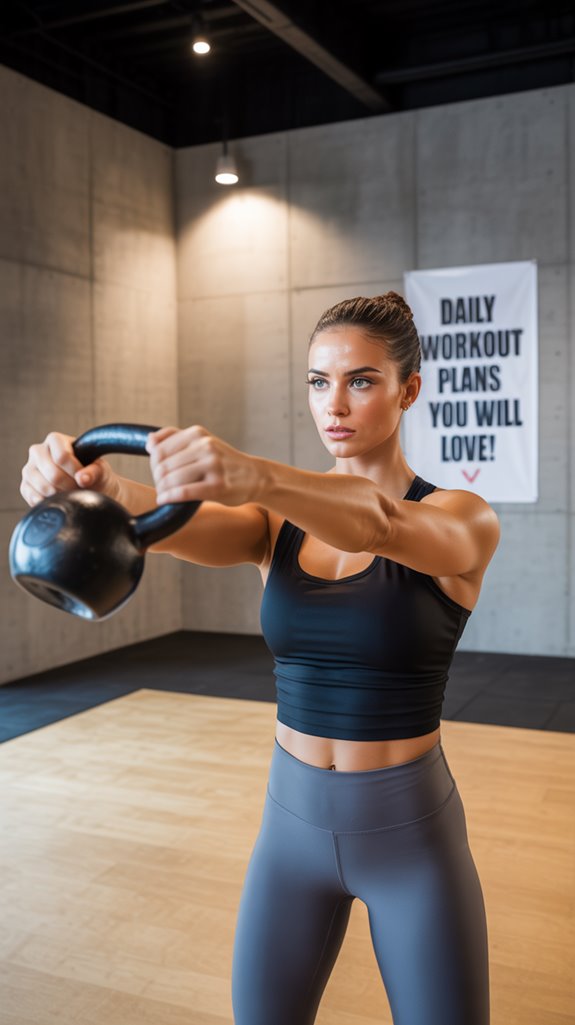
Because most people struggle to find time for exercise, full-body strength training offers a practical solution that delivers maximum results in minimal time. You’ll train all major muscle groups in just 45–60 minutes, requiring only 2–4 sessions weekly. This frequency optimizes muscle protein synthesis while preventing muscle imbalances that lead to injury.
You’ll focus on compound movements—squats, deadlifts, and presses—that engage multiple muscles simultaneously and produce superior strength adaptations. These exercises mirror real-life movement patterns, enhancing functional performance beyond the gym. Research confirms that training each muscle group multiple times weekly generates greater hypertrophy than traditional body-part splits.
The distributed workload reduces soreness and supports faster recovery, making your routine sustainable long-term. You’ll experience improved core stability, cardiovascular benefits, and flexible scheduling that accommodates your lifestyle. Progressive overload remains the foundation of any effective program, requiring you to gradually challenge muscles with increased weight, reps, or intensity over time. Evidence also shows that incorporating weights workouts can improve muscle tone and boost metabolic rate.
Cardio Endurance Workouts to Boost Heart Health

When you engage in regular cardio endurance workouts, you’ll strengthen your heart muscle and blood vessels while improving oxygen delivery to every organ and tissue in your body. Endurance training elevates your VO2 max by 4% to 13.5% within just two to eight weeks of structured sprint exercises, allowing you to sustain longer, more intense sessions before fatigue sets in.
You’ll experience measurable improvements in heart health: reduced blood pressure, up to 10% lower LDL cholesterol, and increased HDL levels. Incorporate moderate-intensity activities like brisk walking, jogging, swimming, or interval training most days weekly. This commitment decreases your risk for heart disease, stroke, diabetes, and Alzheimer’s disease while potentially reversing sedentary lifestyle effects—even if you’re starting in middle age. Make exercise a daily routine habit, just like brushing your teeth, to maintain these cardiovascular benefits throughout your lifetime. Discover a variety of energizing cardio workouts you will love to keep your routine fun and sustainable.
High-Intensity Interval Training (HIIT) for Busy Schedules

If you’re struggling to fit exercise into your packed calendar, HIIT offers a scientifically-backed solution that delivers maximum results in minimal time. You’ll complete sessions in just 15–30 minutes while achieving superior aerobic capacity improvements compared to traditional moderate-intensity training. The HIIT benefits extend beyond time management—you’ll experience significant increases in V̇O₂max, enhanced fat oxidation, and reduced body fat percentage. Your metabolic rate remains elevated for hours post-workout, maximizing caloric expenditure. Studies demonstrate that HIIT produces greater reductions in total cholesterol, LDL-C, and triglycerides while improving body composition through fat loss and lean muscle preservation. Each session comprises short bursts of high-intensity exercise followed by recovery periods, optimizing physiological adaptations including increased capillary density and oxidative enzyme capacity. Research shows that HIIT participants experience higher enjoyment levels compared to those performing moderate-intensity continuous training, making it easier to maintain your routine long-term. Many of the workouts incorporate strength training elements to balance cardio with muscle conditioning, helping prevent plateaus and enhance overall fitness. You’ll transform your fitness efficiently.
Upper/Lower Body Split for Targeted Muscle Growth

While HIIT maximizes efficiency through abbreviated sessions, you’ll need a different approach when your primary goal shifts to building substantial muscle mass. Upper/lower splits deliver superior hypertrophy focus by concentrating substantial volume on specific muscle groups each session. You’ll train upper body (chest, back, shoulders, arms) and lower body (quads, hamstrings, glutes, calves) separately, typically twice weekly on a 4-day schedule.
This split routine provides ideal recovery between sessions while maintaining the frequency necessary for maximal adaptation. You’ll execute multiple sets across various angles for each target muscle, utilizing compound movements like squats, bench presses, and rows to amplify stimulation. The strategic alternation prevents systemic fatigue accumulation while enabling consistent training intensity. This simple structure proves ideal for beginners transitioning into split training methodologies. Intermediate and advanced trainees particularly benefit from this framework’s capacity for specialized volume distribution and progressive overload implementation.
Core Conditioning Routine for Stability and Posture

Beyond building impressive muscle mass, you’ll discover that thorough core conditioning forms the foundation for virtually every movement pattern your body executes. Your transverse abdominis, multifidus, diaphragm, and pelvic floor work synergistically to create intra-abdominal pressure, stabilizing your spine before any movement occurs. This anticipatory core engagement prevents compensatory strain and reduces injury risk substantially.
Implement stability exercises like planks, bird-dogs, and dead bugs to activate deep trunk muscles systematically. These movements enhance postural control by stabilizing your center of pressure during dynamic activities. You’ll notice improved balance, reduced back pain, and efficient force transfer through your kinetic chain. Core stability promotes better breathing and coordination of movements throughout your training sessions.
Train both static holds and dynamic patterns consistently. Focus on activating your core before initiating movement—this neurological sequencing creates the spinal stiffness necessary for peak performance and longevity.
Flexibility and Mobility Workouts for Better Range of Motion

A stable core creates the platform, but your joints need adequate range of motion to execute movements efficiently and safely. You’ll prevent compensatory movement patterns and reduce injury risk by dedicating 20+ minutes several times weekly to flexibility work. Combine static stretching post-workout with dynamic stretching during warm-ups to prepare muscles for loaded ranges. Target major joints systematically, measuring progress in degrees to guarantee quantifiable improvements. Incorporate proprioceptive training alongside mobility drills to enhance balance and coordination—critical for fall prevention as you age. Desk jobs accelerate flexibility loss, making daily movement non-negotiable for maintaining functional independence. Progress gradually, avoiding pain while moving through controlled ranges. Active ROM engages your own muscular effort to move joints through their full range, while passive ROM relies on external assistance. This deliberate approach combats age-related decline, alleviates chronic stiffness, and preserves your ability to perform daily activities without assistance.
Circuit Training for Combined Strength and Cardio
When you’re short on time but need both cardiovascular conditioning and strength gains, circuit training delivers measurable results in 20–30 minutes. You’ll elevate your heart rate throughout while building muscular strength—studies show upper-body improvements of 20% and lower-body gains of 23%. By alternating resistance and aerobic intervals with minimal rest, you’ll reduce body fat by 4.3% and increase muscle mass by 1.9%. Circuit modifications allow you to customize exercise selection based on your fitness level, incorporating weights, bodyweight movements, or resistance bands. As you advance, workout progression through higher intensities produces neuromuscular adaptations that enhance coordination and efficiency. You’ll target multiple muscle groups simultaneously, boost VO₂max by 6.3%, and sustain an elevated metabolic rate that optimizes calorie expenditure and fat loss. Research indicates that three weekly sessions produce the largest improvements in maximal strength compared to other training frequencies.
Bodyweight Functional Training You Can Do Anywhere

You don’t need a gym membership or expensive equipment to build functional strength that translates to real-world movement. Bodyweight functional training delivers extraordinary results wherever you are—your living room, a park, or a hotel room. The bodyweight benefits extend beyond convenience: you’ll increase VO₂peak by 7% in six weeks, boost overall strength by up to 38.6%, and improve dynamic balance by 14%. These programs reduce all-cause mortality by 23–33% while lowering metabolic syndrome risk by 39–44%. The workout adaptability makes progression seamless—modify exercises to match your current capacity, then scale intensity as you advance. With sessions as brief as 11 minutes producing measurable improvements, you’ll maintain consistency without sacrificing effectiveness, building resilient strength that enhances every movement pattern you perform daily. Training protocols based on Five Basic Exercises principles demonstrate that structured bodyweight programs improve cardiorespiratory fitness with minimal time investment.
Low-Impact Options for Joint-Friendly Fitness
Joint pain shouldn’t stop your fitness progress—low-impact exercise delivers powerful health benefits while protecting vulnerable joints from excessive stress.
Walking benefits include improved cardiovascular health, maintained bone density, and enhanced joint stability—67.2% of adults with arthritis choose walking as their primary activity. Progress to incline walking for intensity without additional joint loading.
Aquatic exercises like swimming and water aerobics utilize buoyancy to reduce joint stress by up to 90% while providing full-body resistance. You’ll improve mobility, flexibility, and balance through multidirectional water resistance, making these ideal for arthritis management and injury recovery.
Cycling and elliptical training strengthen lower-body muscles—quadriceps, glutes, hamstrings—without jarring impact. Mind-body practices including yoga, tai chi, and Pilates develop joint flexibility, strength, and balance through controlled movements that enhance body awareness while minimizing strain. These activities help reduce feelings of depression and anxiety while building strength and stability to prevent future injuries.
Active Recovery and Restorative Sessions for Longevity

Beyond protecting your joints during exercise, strategic rest between intense workouts amplifies your fitness gains and extends your training lifespan. Active recovery accelerates nutrient delivery while clearing lactic acid, directly reducing soreness and boosting next-day performance. You’ll experience mental restoration through endorphin release during light movement, strengthening workout adherence far beyond passive rest.
Implement these evidence-based protocols:
- Schedule 30–60% intensity sessions featuring walking, cycling, or swimming between demanding workouts
- Integrate mobility exercises and foam rolling to combat tightness and support injury prevention
- Practice yoga benefits through slow-paced flows that enhance flexibility and psychological recovery
- Vary your methods weekly to maintain engagement and thorough adaptation
These restorative sessions don’t delay progress—they accelerate it by optimizing your body’s repair mechanisms and sustaining long-term consistency. Regular exercise necessitates rest days for recovery, which help your body adapt and prevent overtraining while encouraging muscle repair and growth.
Conclusion
You’ve got the blueprint—now it’s time to ignite that fire within. These ten workout plans aren’t just routines; they’re your ladder out of the comfort zone and into a stronger, more vibrant you. Don’t let another day slip through your fingers like sand. Lace up those sneakers, silence the doubts whispering in your ear, and transform sweat into success. Your body’s capable of incredible things—you just need to release it.